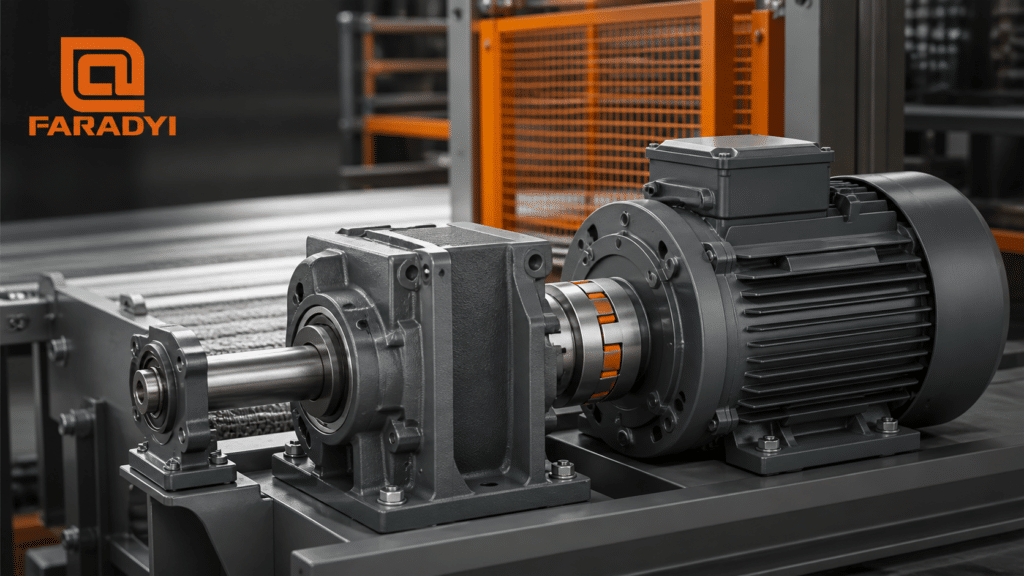
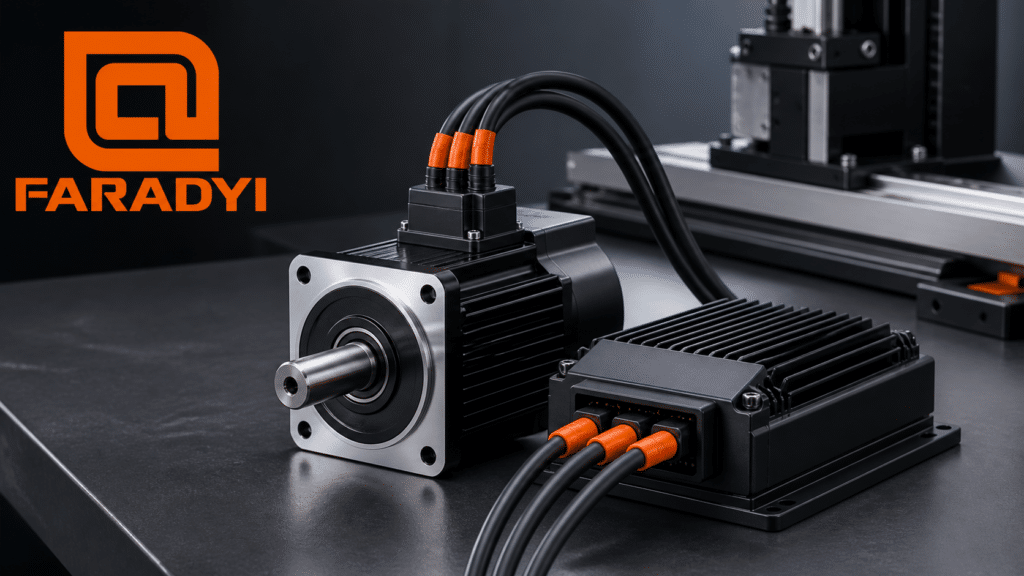
In the world of automation, robotics, and precision machinery, one component is essential for achieving accuracy and control: the servo motor. But what is a servo motor, and how does it differ from a standard motor?
At فارادي موتور, we specialize in high-performance motion control, and this guide will walk you through everything you need to know. We’ll explore how servo motors work, their core components, and where they are used to power today’s most advanced technology.
What is a Servo Motor? The Definition
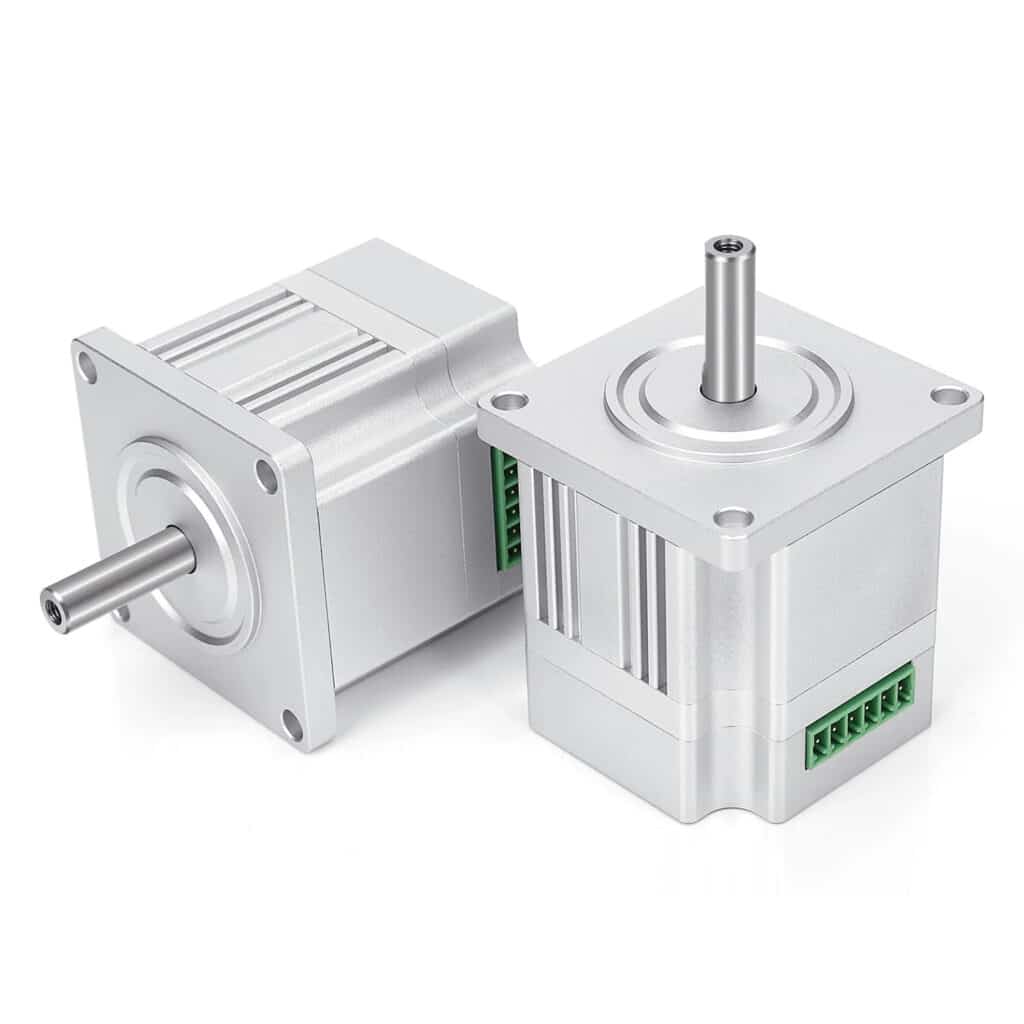
A servo motor is not just a single component but a complete system comprised of a motor, a feedback device (like an encoder), and control electronics. Unlike a standard motor that simply rotates when power is applied, a servo motor provides extremely precise control over its angular or linear position, velocity, and acceleration.
The defining feature of a servo motor is its use of a closed-loop feedback system. This system constantly monitors the motor’s actual position and compares it to the commanded position, making real-time adjustments to eliminate any error.
How Does a Servo Motor Work? Understanding the Closed-Loop System
The magic of a servo motor lies in its feedback loop. Here’s a simple breakdown of the process:
-
- Control Signal: The process begins when a control signal (like a pulse-width modulation or PWM signal) is sent from a controller (e.g., a PLC or an Arduino). This signal tells the servo motor the desired position it should move to.
-
- Motor Actuation: The control circuitry inside the servo system receives this signal and powers the motor, causing it to rotate towards the desired position.
-
- ردود الفعل على الموقف: As the motor shaft spins, a feedback device—typically a high-resolution encoder—is attached to it. This encoder tracks the exact position, speed, and direction of the shaft.
-
- Error Correction: The encoder sends this real-time position data back to the control circuitry. The circuitry then compares the motor’s actual position with the desired position sent by the controller.
-
- Adjustment: If there is any difference (an “error”), the controller instantly adjusts the power to the motor to correct its position until the error is zero. This happens hundreds or even thousands of times per second, ensuring unparalleled precision.
Core Components of a Servo Motor System
Every servo system, from a small hobby servo to a large industrial one from فارادي موتور, contains four essential parts:
-
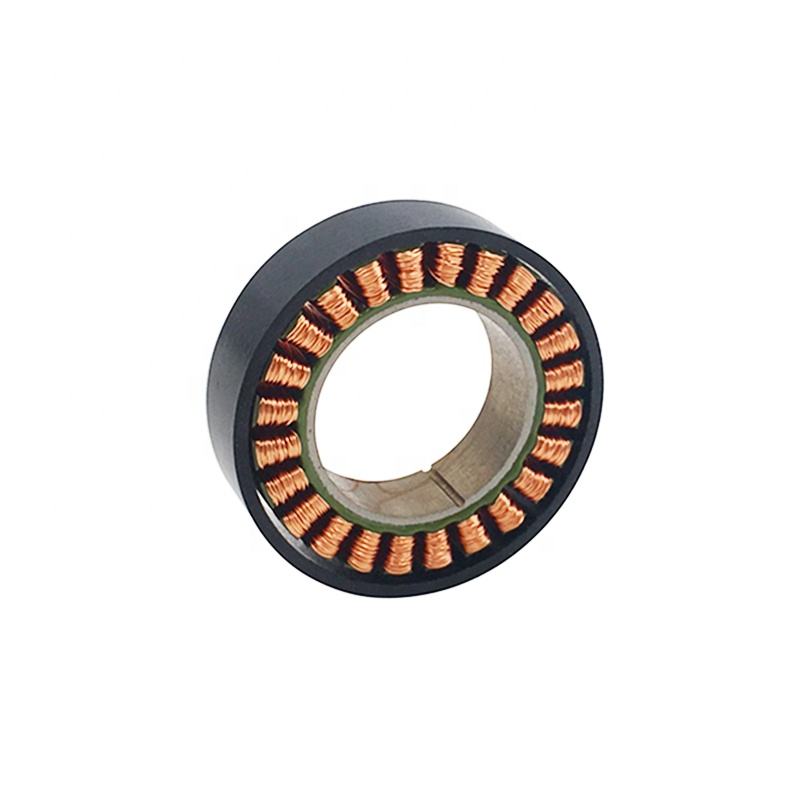
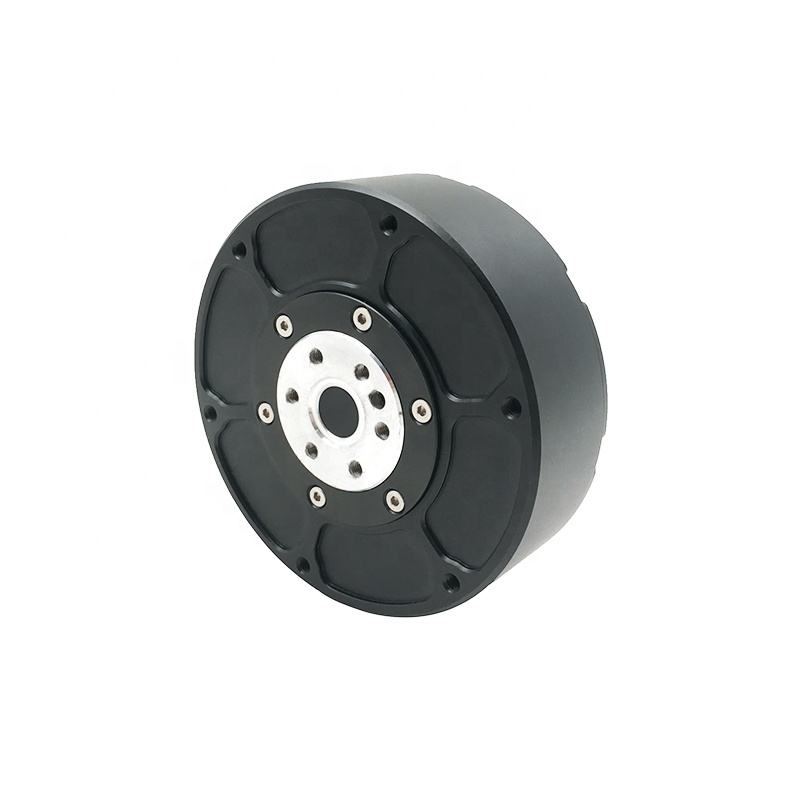
- The Motor: This can be either an AC or DC motor, which does the actual physical work of moving.
-
- The Feedback Device: Almost always an encoder, this sensor is the “eyes” of the system, reporting back the motor’s exact position.
-
- The Control Circuitry: The “brain” of the system that processes the input signal, reads the feedback from the encoder, and controls the motor’s power.
-
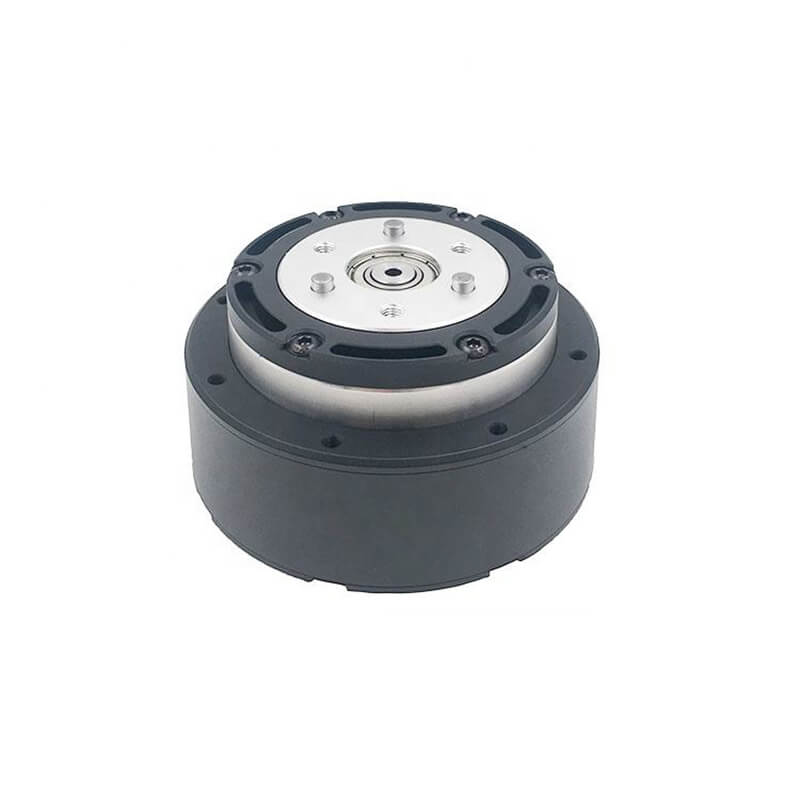
- The Gearbox (Optional but common): Many servo motors include a gearbox to reduce speed and increase torque, allowing a small motor to move heavy loads with precision.
Servo Motor vs. Stepper Motor: What’s the Difference?
This is a common question. While both provide motion control, they operate on fundamentally different principles.
| Feature | Servo Motor (Faradyi Motor) | محرك متدرج |
|---|---|---|
| Control System | Closed-Loop: Uses feedback to ensure accuracy and correct errors. | Open-Loop: Assumes the motor moved to the correct position without verifying. |
| Precision | Highest precision and repeatability. | Good precision, but can lose steps (position) if overloaded. |
| Speed & Torque | Can maintain high torque at high speeds. | Torque drops off significantly at higher speeds. |
| كفاءة | Highly efficient; only draws power when needed to move or hold a position. | Draws full power continuously, even when holding a position. |
| Cost | Generally more expensive due to complex electronics and encoder. | More cost-effective and simpler to implement. |
In short: Use a servo motor when performance, speed, and absolute positional accuracy are critical. Use a stepper motor for simpler, lower-cost applications where the risk of losing position is acceptable.
Common Applications for Servo Motors
Thanks to their precision, you can find servo motors in a vast range of demanding applications, including:
-
- Robotics: For precise joint movement in robotic arms.
-
- CNC Machining: To control the exact position of cutting tools.
-
- Manufacturing & Automation: In conveyor belts, bottling machines, and automated assembly lines.
-
- Camera & Optics: For autofocus and image stabilization systems.
-
- Aerospace: To control flaps and rudders on aircraft.
-
- Medical Devices: In surgical robots and medical imaging equipment.
Why Choose Faradyi Motor for Your Servo Needs?
When your application demands the best, you need a partner you can trust. فارادي موتور servo systems are engineered for:
-
- Unmatched Precision: Our high-resolution encoders and advanced control algorithms ensure your machine operates with pinpoint accuracy.
-
- High Reliability: Built with industrial-grade components, our motors are designed for long life in the most demanding environments.
-
- Peak Performance: Get the high torque and high speed you need without compromising on control.
خاتمة
A servo motor is far more than just a motor; it’s an intelligent, precise, and powerful system that makes modern automation possible. By using a closed-loop feedback system, it delivers the accuracy and reliability that applications in robotics, CNC, and manufacturing require.
Ready to bring the power of precision to your next project? Explore Faradyi Motor’s industry-leading range of servo motors or contact our engineering team today to find the perfect solution for your needs.