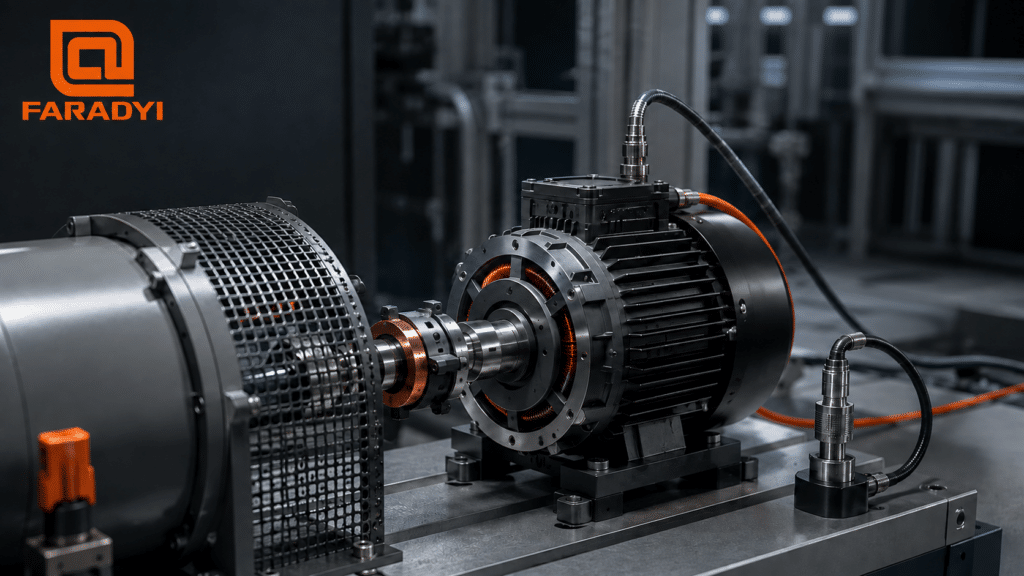
Understanding BLDC Motor Torque Ripple: Causes & Solutions
The Bottom Line (Key Takeaway): In permanent magnet motores de corriente continua sin escobillas, BLDC motor torque ripple is a common periodic fluctuation in output torque. This ripple directly negatively impacts motor performance by increasing vibration, generating noise, and accelerating mechanical wear. To solve this, engineers must combat magnetic field non-uniformity through optimized structural design (like magnet shaping) and deploy advanced driving algorithms like Field-Oriented Control (FOC).
The Complete Guide to Torque Ripple: Causes, Impacts, and Solutions
To effectively diagnose and resolve torque pulsation in your motor system, refer to this structured engineering breakdown:
Categoría
Key Factors & Engineering Details
1. Core Causes of Ripple
No uniformidad del campo magnético: Uneven distribution of the magnetic field inside the motor leads to varying magnetic forces on the rotor at different positions.
Parámetros de diseño del motor: Flaws or compromises in the structural design, such as coil layout and permanent magnet shape, naturally induce torque pulsation.
Algoritmos de control: Basic or poorly tuned driving algorithms fail to smooth out the power delivery, resulting in choppy torque behavior.
2. Negative Impacts on System
Vibración y Ruido: Pulsations act as mechanical shocks, destroying the stability and acoustic comfort of the motor operation.
Reducción de eficiencia: Torque ripple wastes energy as heat and vibration, reducing overall efficiency within certain speed ranges.
Desgaste mecánico: Long-term operation with pronounced ripple torque accelerates the fatigue of bearings and shafts, drastically reducing lifespan.
3. Engineering Solutions
Optimization of Hardware Design: Minimizing magnetic field non-uniformity by tweaking the magnet shape, adjusting the air gap, and refining the coil layout.
Advanced Control Algorithms: Upgrading the driver to use Field-Oriented Control (FOC) or Direct Torque Control (DTC) to electronically smooth the torque output.
Sensor Integration: Adding high-precision gyroscopes or encoders for real-time monitoring, allowing the control system to actively compensate for vibration.
Q&A: Quick Diagnostic Guide
Question: Are “BLDC” and “permanent magnet brushless DC motor” the same in this context?
Answer: Yes. In engineering applications, BLDC units are generally referred to as permanent magnet brushless DC motors, and the terms are used interchangeably.
Question: How exactly does torque ripple affect my overall system?
Answer: It creates high-frequency vibration and audible noise. Over time, this periodic mechanical stress accelerates wear on your system’s bearings and couplings, while also increasing energy consumption and lowering efficiency.
Question: What is the fastest way to reduce torque ripple without changing the motor hardware?
Answer: The most effective non-hardware solution is upgrading your motor driver. Implementing advanced control algorithms like Field-Oriented Control (FOC) can actively smooth out the current waveforms, drastically reducing torque pulsation.