How to Master Stepper Motor Selection? 3 Key Factors Explained
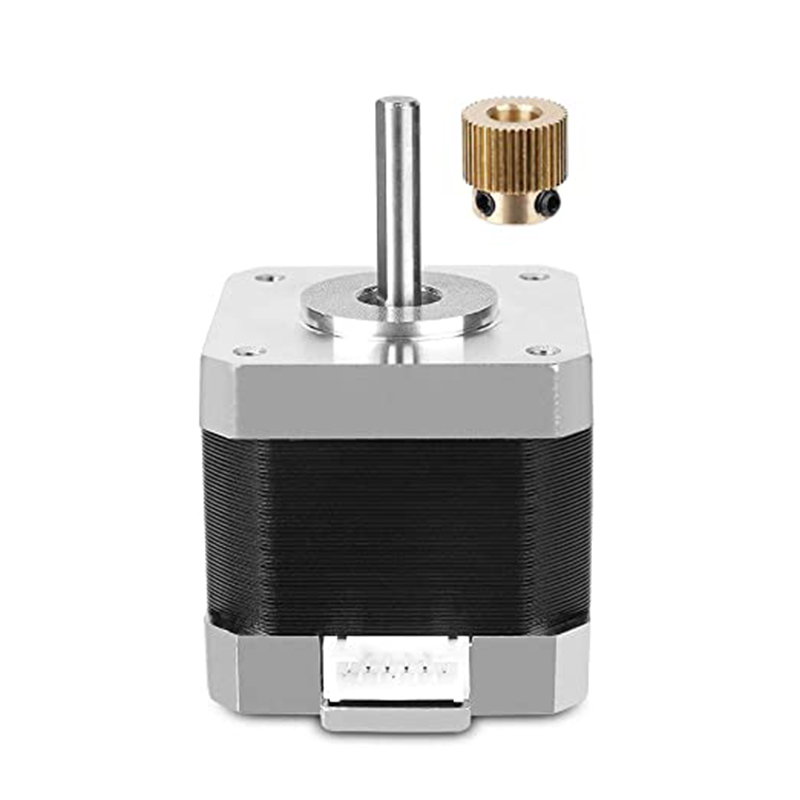
The Bottom Line (Key Takeaway): As a fundamental execution component in mechatronics and automated motion control systems, selecting the right Schrittmotor comes down to defining three primary parameters: Step Angle (Phase), Static Torque, and Current. Once these three major factors are determined, the exact motor model and geometric dimensions are locked in.
1. Selection of Step Angle (Accuracy Requirements)
The step angle of the motor depends entirely on your load accuracy requirements. To find the right angle, calculate the minimum resolution (equivalent) required by the load and convert it to the motor shaft. The step angle of your selected motor must be equal to or less than this calculated angle (factoring in any deceleration mechanisms).
Different motor phases offer different standard step angles. Here is a quick reference:
Motortyp
Common Step Angles (Degrees)
2-Phase & 4-Phase Motors
0.9° / 1.8°
3-Phase Motors
1.5° / 3.0°
5-Phase Motors
0.36° / 0.72°
2. Selection of Static Torque (Load Capacity & Size)
It is often difficult to pinpoint the exact dynamic torque required right away. Therefore, engineers typically determine the static torque first. This selection is based on the motor’s total load, which is divided into two types: Inertia Load Und Friction Load. Single inertia or single friction loads do not exist in reality; they must be evaluated based on the operating phase:
Direct Starting (Low Speed): Both inertia and friction loads must be considered.
Acceleration Phase: The inertia load is the primary factor.
Constant Speed Running: Only the friction load needs to be considered.
Engineering Rule of Thumb: Under normal circumstances, the motor’s static torque should be 2 to 3 times the friction load. Once the static torque is correctly sized, the motor’s physical base (NEMA frame size) and length are determined.
3. Selection of Current (Operating Characteristics)
Selecting the static torque is not the final step. Motors with the identical static torque can exhibit vastly different operating characteristics depending on their current parameters.
To ensure the motor will not stall at your target operating speed, the motor’s current should be strictly judged and selected based on the manufacturer’s torque-frequency characteristic curve. This curve maps out exactly how much torque is available at different pulse frequencies (speeds).
Looking for precision motion control solutions?
At Faradyi-Motoren, we offer a wide range of highly reliable stepper motors tailored for automated systems. Contact us today to get expert sizing assistance and a quick quotation.