Comment contrôler la vitesse d'un moteur à courant continu : meilleures méthodes
Introduction
DC motors are electric motors that run on direct current power. If you’re exploring how to control the speed of a DC motor, this guide summarizes proven techniques used in real applications. Controlling speed is essential to vary motor performance according to requirements and optimize functionality in devices like vehicles, elevators, and more. Both electronic and mechanical methods are used.
How a DC Motor Works
A simple DC motor transforms electrical energy into mechanical energy using electromagnetic induction. When current flows through the armature winding, it creates a magnetic field that interacts with the field from permanent magnets, producing torque and rotation.
According to Faraday’s law, the rotating armature also induces an opposing (back) EMF. The supply voltage overcomes this EMF to sustain rotation. Thanks to this counter-EMF effect, DC motors inherently adjust torque with changing load.
Why Speed Control Matters
-
Different materials and processes require specific speeds (e.g., optimal drilling speeds).
-
In pumping systems, throughput depends on impeller speed.
-
Speed control optimizes motor function under varying conditions and loads.
Key Factors That Determine Speed
The speed of a DC motor depends on:
-
Tension d'alimentation
-
Field flux
-
Armature resistance
-
Applied armature voltage
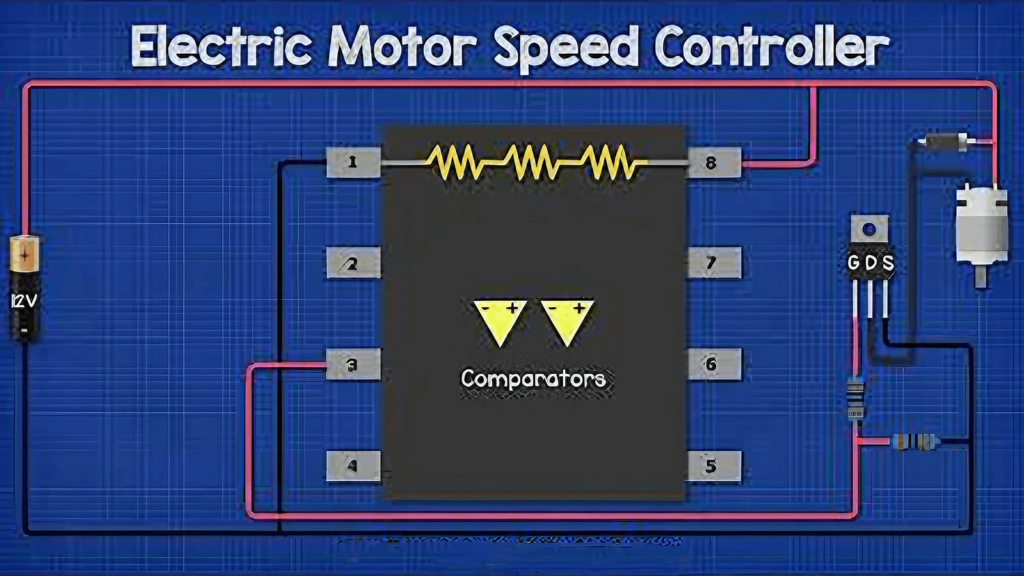
Speed-control methods target one or more of these parameters using variable resistors or power supplies. Modern electronic methods like PWM are widely used for efficient control.

Common Speed-Control Methods
1) Armature Resistance Control
Insert a variable resistor in series with the armature to drop part of the supply voltage, reducing the effective armature voltage and speed.
2) Field Resistance Control
Adjust resistance in the field circuit to vary field current and flux. Changing flux alters speed: weakening the field generally increases speed.
3) Armature Voltage Control
Vary the applied armature voltage from the supply to directly set motor speed across a broad range.
4) Flux Control
Alter the motor’s magnetic flux (e.g., by changing field current). Since speed is inversely related to flux for a given voltage, reducing flux increases speed.
5) PWM (Pulse-Width Modulation) Control
A modern, efficient electronic method that rapidly switches the supply, varying the effective armature voltage by duty cycle. PWM provides smooth, practical speed control with reduced power loss compared to resistive methods.
Choosing the Right Method
Match the approach to your required speed range, cost, and efficiency:
-
Traditional methods: variable external resistors or power supplies.
-
Modern solutions: electronic control (especially PWM) for efficiency and fine control.
Proper selection and design enable effective DC motor use across diverse industrial applications.
Q&A
Why is controlling the speed of a DC motor important?
Short answer: Different applications require different motor speeds to perform optimally. For example, drilling various materials has specific optimum speeds, and in pumping systems, flow rate depends on impeller speed. More broadly, speed control lets you match motor performance to changing loads and conditions, improving functionality in devices like vehicles, elevators, and industrial equipment.
What factors determine the speed of a DC motor?
Short answer: The motor’s speed depends on supply voltage, field flux, armature resistance, and applied armature voltage. Speed control methods target one or more of these parameters—by changing voltage, adjusting field or armature resistance, or altering magnetic flux—to set the desired speed.
How does a DC motor inherently adjust to load changes?
Short answer: As the armature rotates, it generates a counter (back) EMF that opposes the supply voltage, per Faraday’s law. When load increases and the motor slows slightly, counter EMF drops, allowing more current and torque to flow; when load decreases, counter EMF rises, reducing current. This back-EMF effect helps the motor self-adjust torque with load to sustain rotation.
What are the main methods to control DC motor speed?
Short answer: Common methods include:
-
Armature resistance control: Insert variable resistance in series with the armature.
-
Field resistance control: Adjust field circuit resistance to change field flux.
-
Armature voltage control: Vary the applied armature voltage from the supply.
-
Flux control: Alter the motor’s magnetic flux to influence speed. Modern electronic approaches, especially PWM (pulse-width modulation), are widely used because they efficiently vary the effective armature voltage for smooth, practical speed control.
How should I choose a speed-control approach for my application?
Short answer: Match the method to your required speed range, cost targets, and efficiency needs. Both mechanical and electronic design options are used in practice: traditional methods use variable external resistors or power supplies, while modern solutions favor efficient electronic control like PWM. The right choice balances performance with practicality for the intended application.