How to Reduce Brushless DC Motor Stall Current
The Bottom Line (Key Takeaway): To safely reduce ブラシレスDCモーター stall current and prevent your equipment from overheating, engineers must optimize the motor’s internal armature resistance or adjust the external power supply circuit. Balancing this current is critical: a stall current that is too high will rapidly burn out the motor, while a current that is too low will prevent the motor from starting under load.
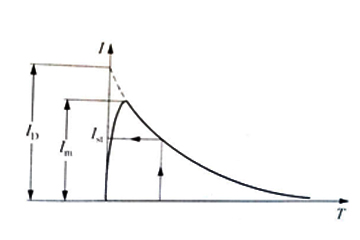
現在の遷移を開始 ブラシレスDCモーターのプロセス
What is Stall Current vs. Starting Current?
In brushless DC motors, people often confuse stall torque with starting torque. However, a detailed analysis reveals a distinct difference.
The stall torque is the exact amount of opposing force applied to a running motor that forces it to gradually slow down and completely stop. At this precise moment, the torque output by the motor equals the braking torque applied to it. The electrical current required by the motor to maintain this state is defined as the stall current.
When a stationary motor is given its rated voltage, it goes through a “time transition process.” The current waveform during this start-up phase is typically a single pulse wave. The peak value of this starting current should always be less than the motor’s actual stall current.
Why is Stall Current Dangerous?
The internal resistance of the motor dictates its stall current. A motor with lower internal resistance will draw a massive stall current. Once stalled, this high current causes the motor to heat up incredibly fast, leading to permanent burnout. Conversely, if you engineer the motor with a stall current that is too small, its starting current will also be severely limited, leading to a “soft” mechanical characteristic where the motor struggles to start or drops speed too quickly under stress.
3 Proven Methods to Reduce Brushless DC Motor Stall Current
To achieve the perfect balance and protect your system, here are three highly effective engineering methods:
Increase the Armature Resistance: You can naturally reduce the stall current by increasing the armature resistance. This is done by carefully selecting a motor wire diameter that is slightly smaller, ensuring it limits current flow without negatively impacting the motor’s overall performance or safe current density. This method is especially crucial when the motor is powered by a battery or a rectifier power supply.
Optimize the Motor Slenderness Ratio (Lengthen the Armature): Modify the physical geometry of the motor by reducing the diameter of the armature punching plate while simultaneously increasing the overall length of the armature. A longer motor armature naturally possesses higher armature winding resistance. This structural change appropriately limits both the motor’s stall current and its starting peak current.
Insert a Series Current Limiting Resistor: For external control, you can insert a current limiting resistor in series within the motor’s power supply circuit. This physically chokes the electrical flow, preventing both the stall current and the starting peak current from becoming dangerously high. Engineering Note: This resistor will consume power and generate secondary heat, so sufficient cooling measures must be considered.