Stepper motor vibration and noise can come from the commanded step pattern, driver current regulation, mechanical resonance, mounting, or a developing fault. A sound at standstill is not automatically the same problem as a rough speed band during motion.
Before changing parts, identify when the symptom occurs and whether the mechanism still reaches its intended position. That observation helps separate an acoustic issue from a missed-move or mechanical problem.
Quick answer: Record the operating condition, inspect mounting and connections, then check current settings, microstepping, speed profile, and load. Change one variable at a time. Validate temperature and positioning after every adjustment; a quieter motor is not automatically a correctly controlled motor.
Stepper motor vibration and noise: classify the symptom
Swipe horizontally to read the table on a phone.
| When it happens | Possible contributors | Useful first check |
|---|---|---|
| Energized standstill | Current regulation, holding settings, structural response | Driver mode, current setting, whether the load moves |
| Narrow moving-speed band | Resonance of motor and attached mechanics | Controlled speed sweep with the same load |
| Acceleration or reversal | Abrupt commands, insufficient torque, clearance or compliance | Motion profile and actual position result |
| Every revolution or travel position | Misalignment, damaged parts, uneven friction | Couplings, shaft support and full-travel inspection |
| New sound after warm-up | Thermal changes, driver protection, lubrication or component condition | Temperature trend and fault status |
Why discrete stepping can excite the mechanism
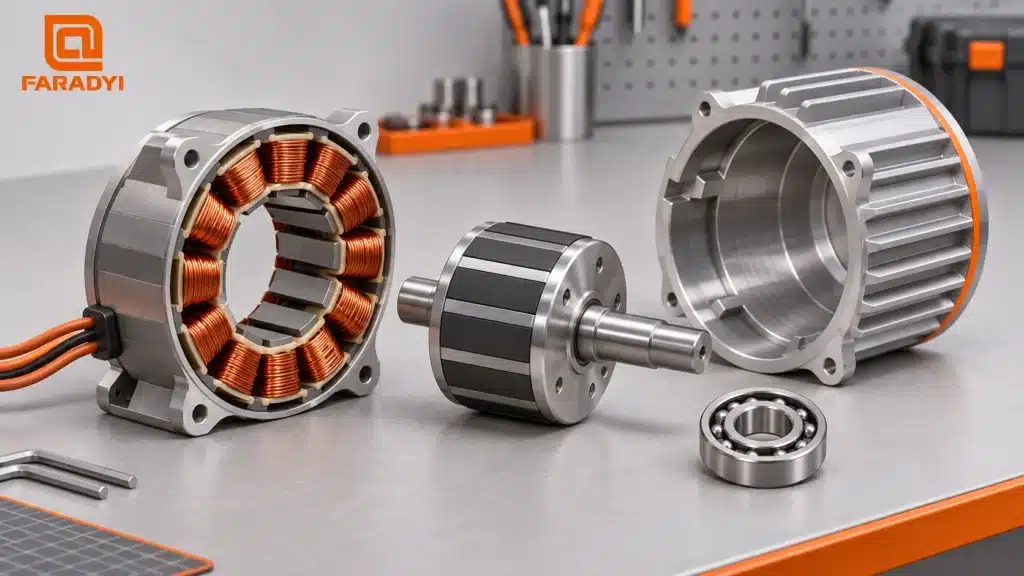
After a commanded step, the rotor can oscillate around the new equilibrium position before settling. Repeated excitation can interact with the natural response of the motor, coupling, load, and mounting structure.
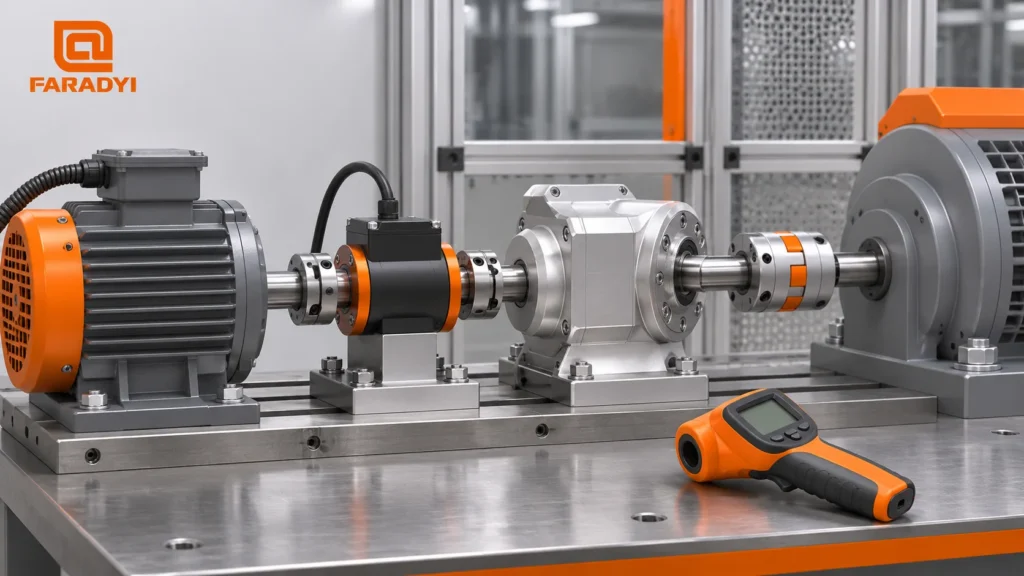
Resonance therefore belongs to an assembled system, not to one universal motor speed. Changing inertia, stiffness, damping, or the excitation can change the response. Oriental Motor’s vibration demonstration illustrates step response and resonance; its example conditions should not be treated as limits for every motor.
Sound can also be amplified by a panel or machine frame even when shaft motion is acceptable. Identify the source and the structure transmitting it before adding an isolator or changing the motor mount.
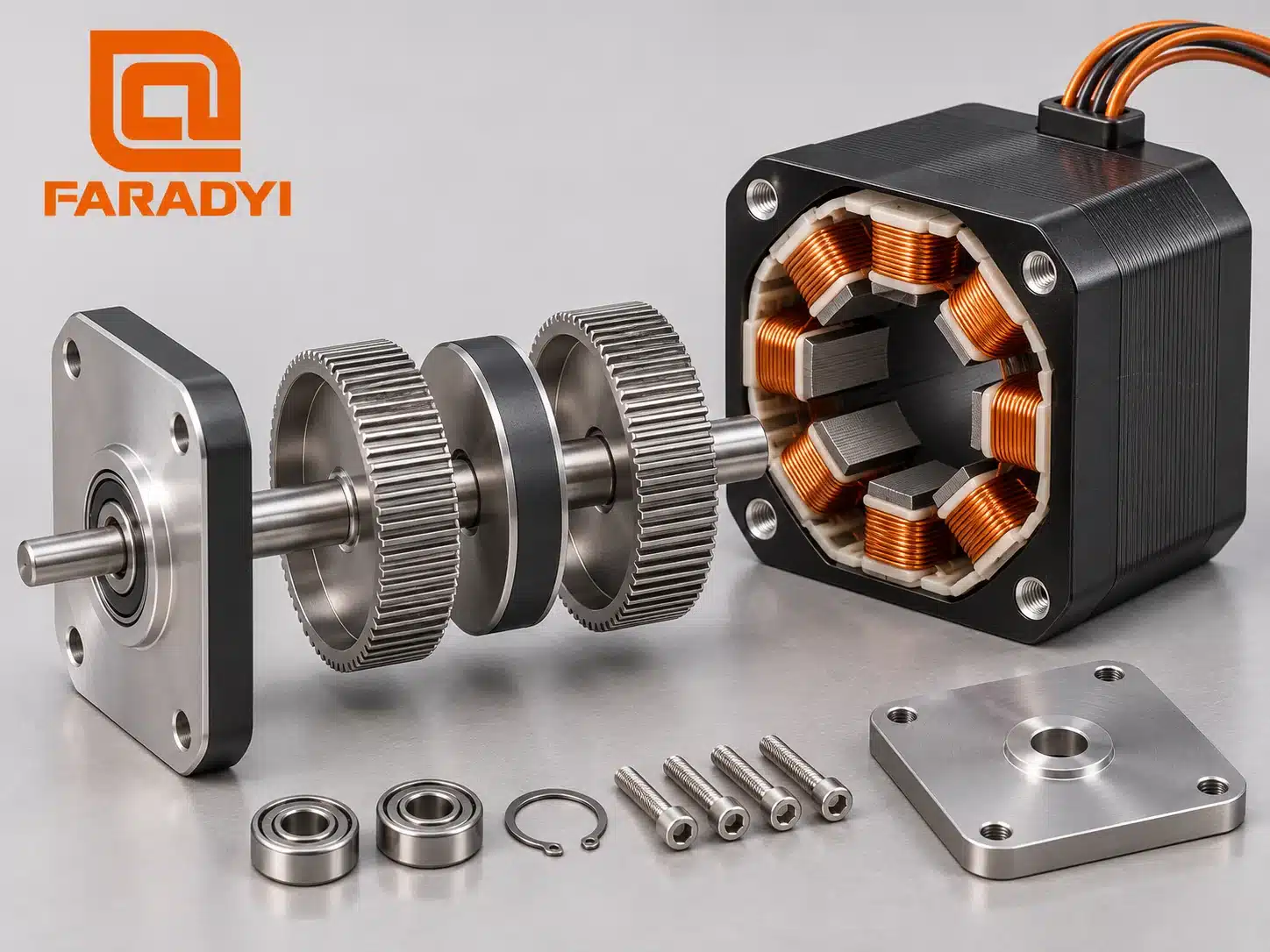
Check electrical setup before tuning around it
Incorrect phase pairing, a loose connection, an unsuitable driver setting, or a supply problem can produce rough motion. Verify the winding diagram, connector integrity, enable signals, and driver faults using the product documentation.
Isolate power before inspecting or changing motor wiring. Do not disconnect an energized motor from its driver. Secure mechanisms that could move when holding torque is removed.
Confirm whether the current setting is specified as RMS or peak, and review idle-current reduction. The correct value depends on the selected motor and drive; reducing current until the sound disappears may leave inadequate holding or accelerating torque.
What microstepping can and cannot do
Microstepping controls relative phase currents to create smaller commanded increments. It can reduce excitation associated with large full-step moves and improve smoothness, particularly at low speed. The result depends on the motor and the driver’s current-control behavior.
More microsteps do not guarantee equally finer measured accuracy or eliminate a mechanical defect. They may also increase the command pulse rate needed for the same speed, depending on the driver’s input and interpolation arrangement.
Analog Devices’ microstepping guide explains the resolution and accuracy distinction. Our stepper motor types guide gives broader selection context.
Review the motion profile and available torque
A gentler acceleration or deceleration profile may reduce excitation and demand, but it must still meet the machine’s cycle time. Check running torque at the relevant speed rather than relying on holding torque.
If a speed change improves noise, repeat the full loaded cycle and confirm the final position. Avoid treating a short unloaded test as proof of acceptable production behavior. For buzzing with little movement or an incomplete move, use our stepper motor stalling checklist.
Inspect mounting, coupling, and load
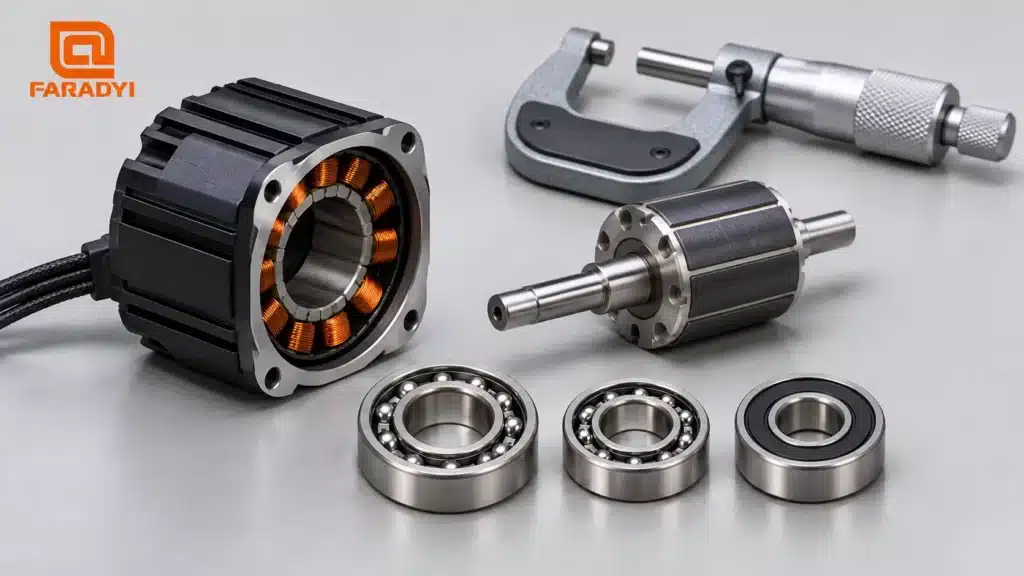
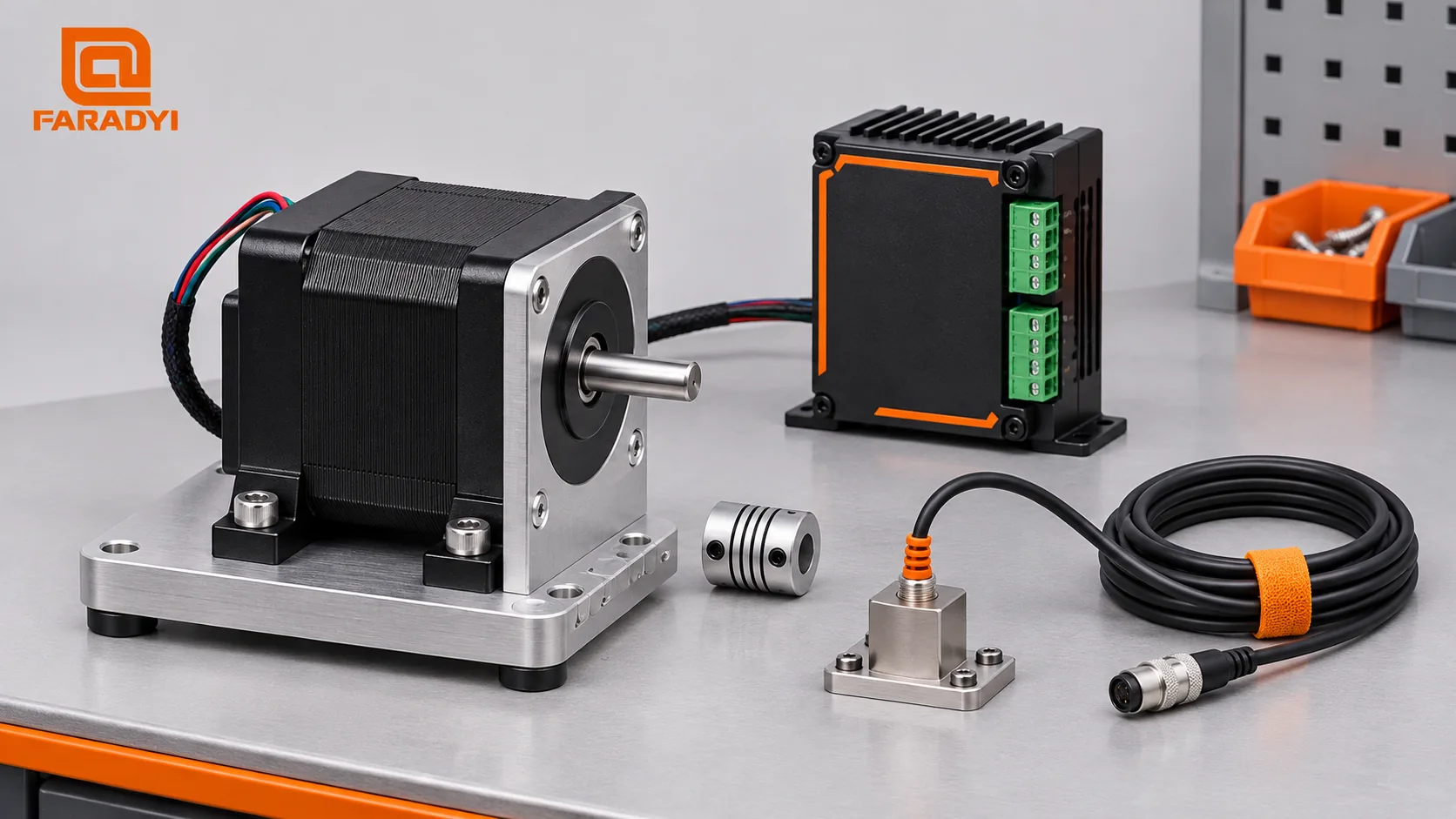
Look for loose fasteners, shaft misalignment, damaged bearings, unsuitable belt tension, coupling clearance, and changing friction through travel. Correct faults before attempting to tune them out.
Dampers or isolation mounts can change vibration transmission, but they can also affect stiffness, alignment, and positioning. Select them as part of the mechanical design. Do not loosen the mounting or add an unverified flexible support simply to make the motor quieter.
Use a repeatable diagnostic test
- Record a baseline. Note motor, driver, current, supply, load, speed, microstep setting, and the symptom.
- Classify the condition. Separate standstill, steady motion, acceleration, reversal, and warm operation.
- Inspect setup and mechanics. Resolve wiring and mounting issues first.
- Change one approved setting. Compare identical moves so the result is meaningful.
- Check the tradeoffs. Measure final position, temperature, holding behavior, and fault response.
- Save the accepted configuration. Keep the settings and test conditions with the machine record.
Frequently asked questions
Does humming mean the motor has failed?
Not necessarily. An energized motor can produce audible sound without failure. New or severe noise, heat, faults, or lost position still require investigation.
Will a larger motor always vibrate less?
No. A larger motor changes torque, inertia, and the system response. Compare a properly matched motor-driver combination under the real load.
Should I always use the highest microstep setting?
No. Choose a setting compatible with motion needs, pulse-rate limits, and the driver. Validate the result rather than choosing from resolution alone.
Resolve the cause, then optimize the sound
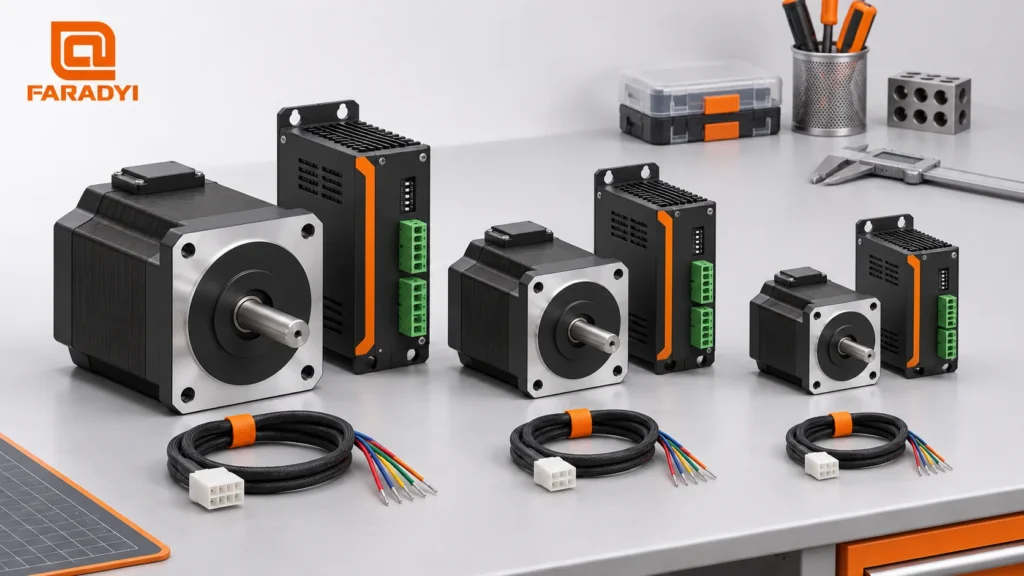
Reducing stepper motor vibration and noise starts with a repeatable diagnosis. Browse Faradyi stepper motors and drivers or send an application inquiry with models, current and microstep settings, speed profile, load, mounting details, temperature, and a description of when the symptom occurs.