How Long Do Brushless DC Motors Last?
There is no single lifespan that applies to every brushless DC motor. A properly selected BLDC motor can operate for many thousands of hours, but its actual service life depends on the specific bearings, lubrication, temperature, speed, radial and axial load, duty cycle, vibration, contamination, installation, controller, and maintenance.
A credible life estimate must state the motor model and operating conditions. When comparing brushless DC motors, a supplier’s rated or estimated hours under defined test conditions should not be treated as a universal guarantee.
Why Brushless Motors Usually Last Longer
Brushed DC motors use sliding brushes and a commutator to switch current. Those contact surfaces wear and may produce debris and arcing. A BLDC motor replaces mechanical commutation with an electronic controller, removing that routine brush-wear mechanism.
Brushless construction does not mean wear-free. The rotor still turns on bearings, seals may contact the shaft, lubricant ages, windings heat and cool, magnets experience temperature and electromagnetic stress, and the controller’s semiconductor and capacitor components age.
What Determines BLDC Motor Lifespan?
Bearings and lubrication
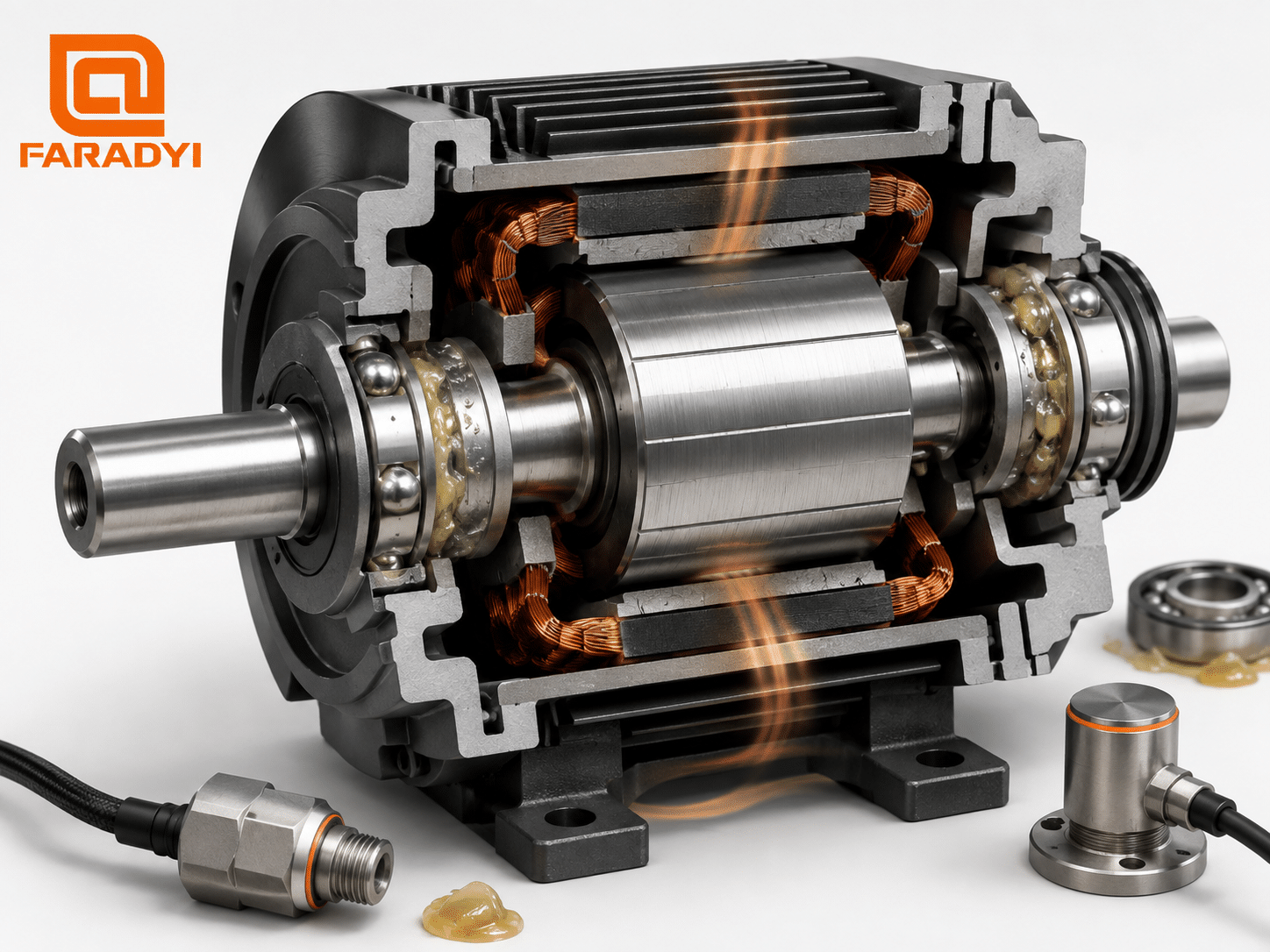
Rolling bearings can fail through fatigue, lubricant breakdown, contamination, electrical damage, incorrect fits, excessive preload, or overload. In many small brushless motors, sealed bearing grease is not renewed, so grease life may govern motor life. Speed, bearing temperature, load, and sealing all affect the outcome.
Temperature
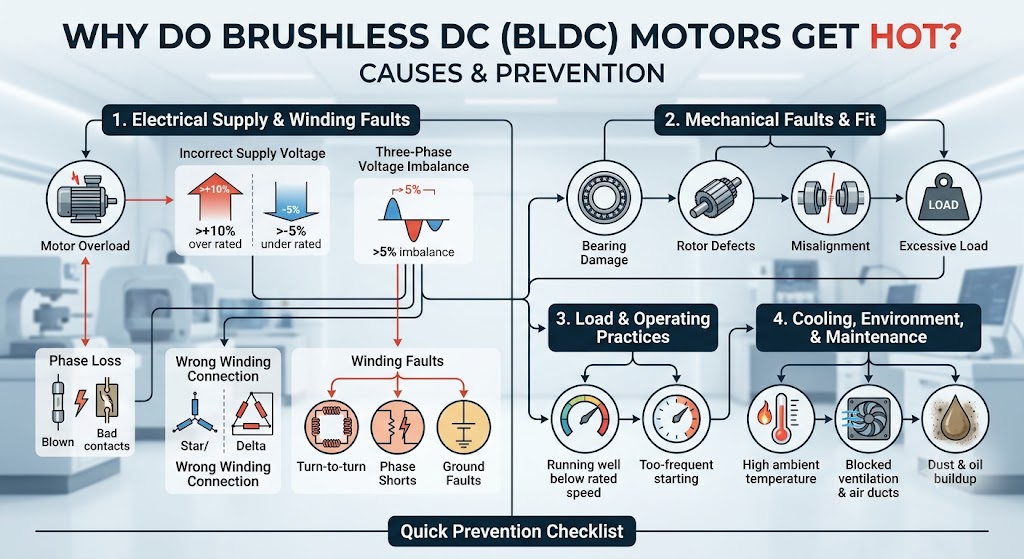
Heat accelerates lubricant and insulation aging and can affect permanent magnets and electronics. Winding current, ambient temperature, airflow, enclosure, switching method, duty cycle, and the mounting surface determine internal temperature. Always use the model-specific temperature limits rather than a generic “safe” case temperature.
Mechanical load and alignment
Belts, pulleys, gears, couplings, and lead screws apply radial or axial bearing loads. An overhung pulley, excessive belt tension, misaligned coupling, unbalanced load, or shaft impact can shorten bearing life even when motor torque appears acceptable.
Speed and duty cycle
Higher speed increases bearing cycles and can increase windage, iron loss, vibration, and lubricant shear. Frequent starts, reversals, stalls, peak-torque events, and long high-load periods influence both thermal and mechanical stress.
Environment and drive quality
Dust, water, chemicals, humidity, salt, shock, and vibration can attack bearings, windings, connectors, and electronics. Incorrect phase current, voltage transients, poor commutation, inadequate protection, or unstable control can overheat or overstress the system.
Lifespan Factors at a Glance
| Factor | How it shortens life | Useful control |
|---|---|---|
| Temperature | Accelerates grease, insulation, magnet, and electronic aging | Reduce loss; improve cooling; stay within ratings |
| Radial/axial load | Increases bearing stress | Verify load direction, magnitude, and lever arm |
| Contamination | Damages lubricant, raceways, windings, and electronics | Correct sealing and clean installation |
| Misalignment/vibration | Adds bearing and shaft stress | Rigid mounting, alignment, balance, monitoring |
| Drive settings | Can cause overcurrent, heat, ripple, or transients | Use a compatible controller and protection |
Phone users: swipe horizontally to view all table columns.
How to Convert Operating Hours to Years
Calendar life depends on utilization. Use: years ≈ estimated operating hours ÷ annual operating hours. A machine running eight hours per day, five days per week accumulates fewer annual hours than a continuously operated process. This conversion does not change the underlying estimate and does not include storage aging, starts, shock, overload, or environmental effects.
Warning Signs of Developing Problems
- Rising vibration or a change in sound
- Increasing case or bearing-area temperature under the same load
- Shaft play, rough rotation, or unstable speed
- Higher current or reduced torque at a known operating point
- Intermittent Hall, encoder, connector, or controller faults
- Odor, discoloration, moisture ingress, or damaged cables
Trend measurements against a healthy baseline. One isolated temperature or vibration reading rarely identifies the root cause by itself.
How to Extend Brushless DC Motor Life
- Select continuous and peak torque with realistic margin.
- Keep winding, bearing, magnet, case, and controller temperatures within model limits.
- Align shafts and avoid excessive belt tension or overhung load.
- Use appropriate ramps instead of repeated abrupt starts and reversals.
- Protect the motor from contamination and moisture with a suitable enclosure.
- Use a compatible controller with correct current limits and fault protection.
- Monitor temperature, vibration, current, and noise under repeatable conditions.
- Follow manufacturer inspection, lubrication, and replacement guidance.
Frequently Asked Questions
Do brushless motors wear out?
Yes. They avoid brush wear, but bearings, grease, insulation, magnets, seals, connectors, and drive electronics still age or fail.
What usually fails first?
Bearings or bearing grease often limit mechanical life, but the first failure depends on the motor and application. Heat, overload, contamination, electrical stress, or controller failure may dominate.
Does lower speed always extend life?
Not always. Lower speed may reduce bearing cycles, but inadequate cooling or high low-speed torque can increase winding temperature. Evaluate the complete operating point.
Can a BLDC motor run continuously?
Yes, if the exact motor and controller are rated for continuous operation at the required torque, speed, supply, cooling, ambient conditions, and shaft loads.
Select a BLDC Motor for Long Service Life
The best answer to how long brushless DC motors last comes from model-specific data plus a realistic duty profile. Review Faradyi Motor brushless DC motors and provide your voltage, loaded speed, continuous and peak torque, duty cycle, starts, radial/axial loads, mounting, ambient temperature, enclosure, feedback, controller, target life, and expected quantity.
Technical References