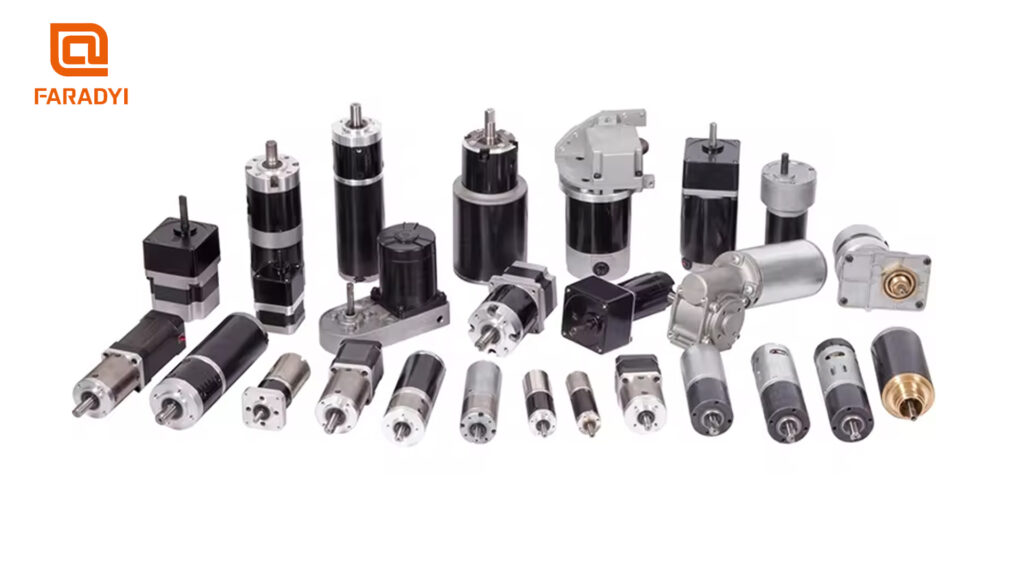
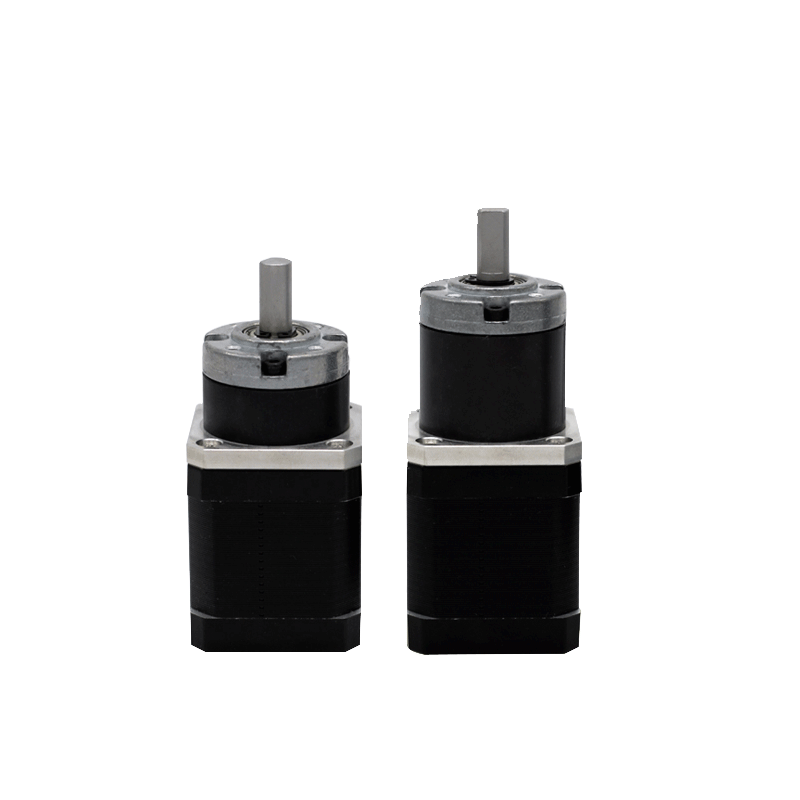
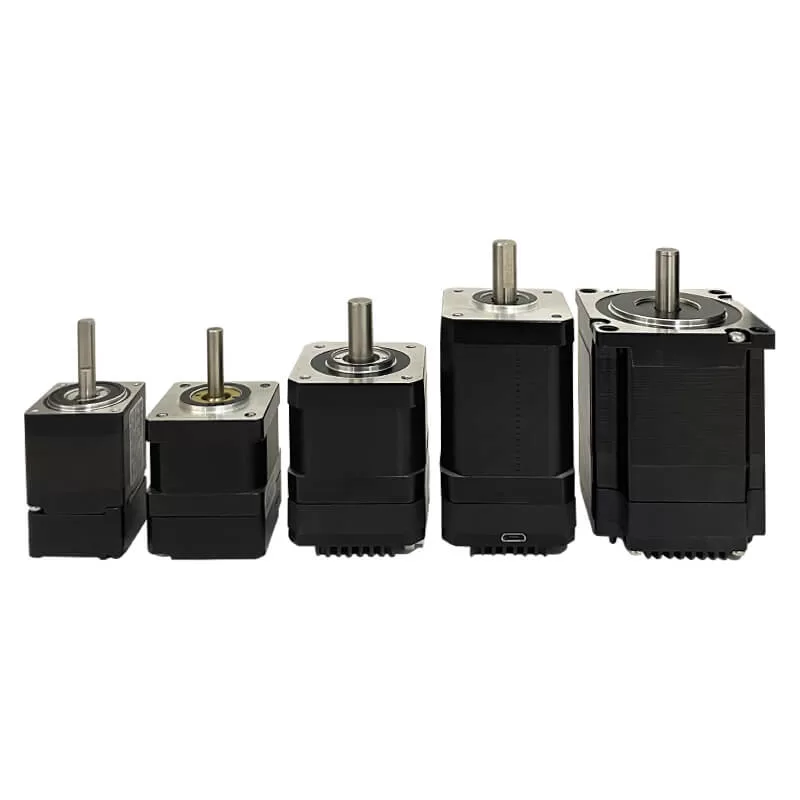
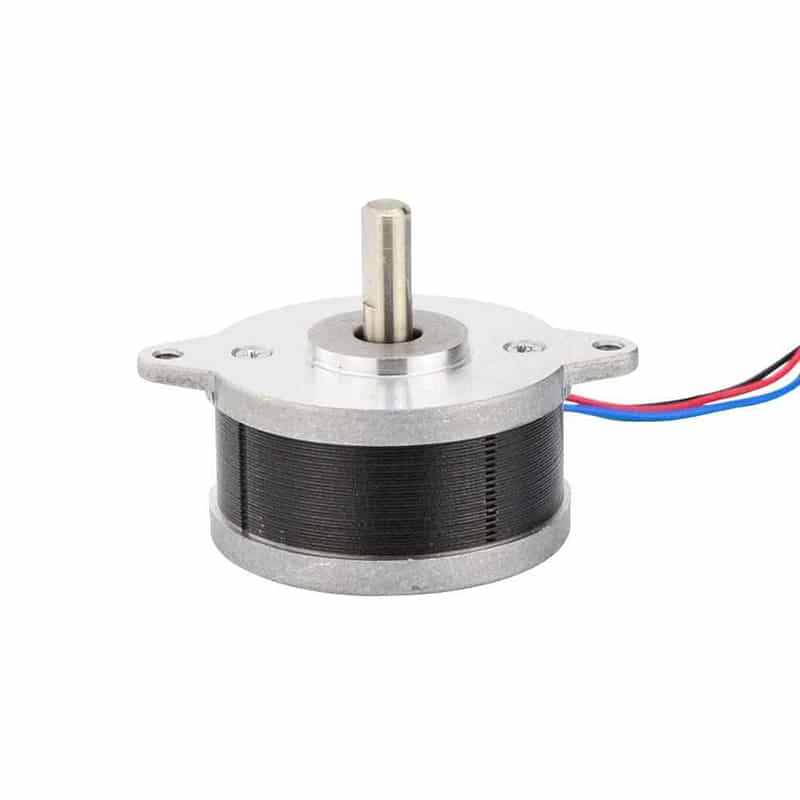
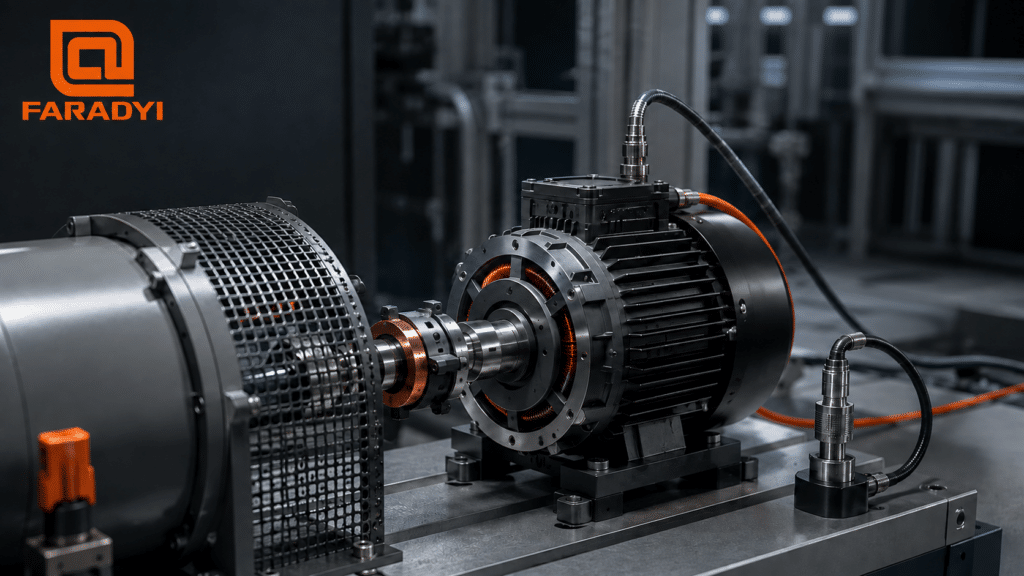
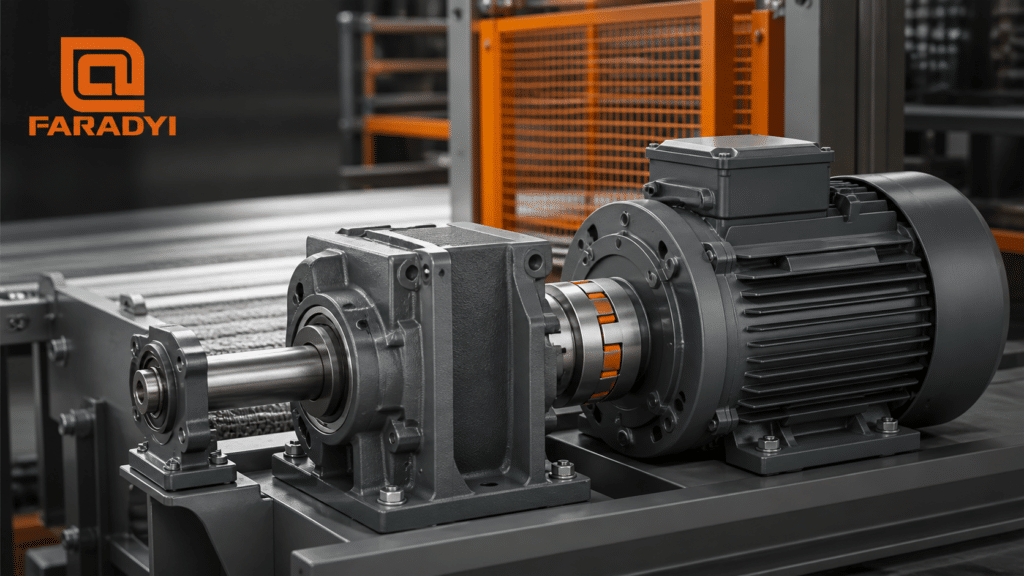
AC Servo Motors: These motors have relatively soft characteristics. When the rated torque is reached, an increase in load torque can easily cause sudden stalling. However, AC servo motors can achieve performance equivalent to DC servo motors through complex control technologies. With the rapid development of semiconductors, the switching frequency of power components has increased, improving the performance of motor drives.
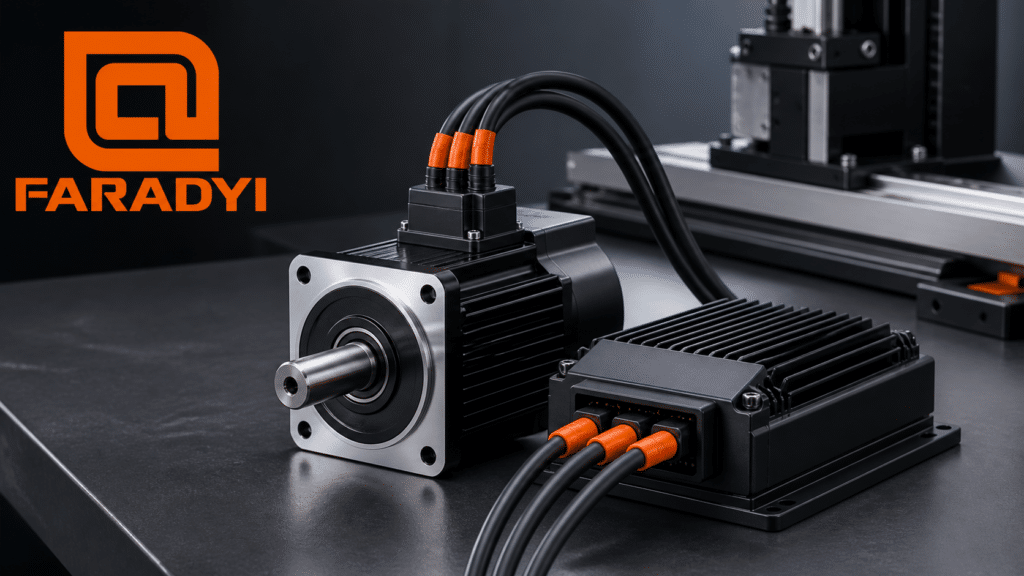
DC Servo Motors: These motors have fast response times, large starting torque, and can provide rated torque from zero to rated speed. They are maintenance-free and robust. DC servo motors offer precise speed control and smooth operation throughout the speed range, with almost no oscillation, high efficiency, and minimal heating.
2. Principle Differences:
AC Servo Motors: The stator’s three-phase coils are powered by the servo encoder control circuit, and the rotor is permanent magnet-type. The direction, speed, and angle of the motor are determined by the encoder controller.
DC Servo Motors: The rotor is also a permanent magnet, and the stator winding is powered by the servo encoder pulse circuit.
3. Control Method Differences:
AC Servo Motors: Three control methods are used—amplitude control, phase control, and amplitude-phase control.
DC Servo Motors: The main control methods are armature voltage control and excitation magnetic field control.
4. Maintenance Cost Differences:
AC Servo Motors: These motors are easy to maintain.
DC Servo Motors: While DC servo motors offer easy speed control and high precision, they are more expensive to maintain and operate.
For inquiries or assistance with DC or AC servo motors and related solutions, contact 파라디테크놀로지 주식회사, 글로벌 산업 자동화를 위한 고성능, 고품질 DC 브러시리스 모터, DC 서보 모터, 스테퍼 모터 및 관련 드라이버 컨트롤러의 개발과 생산을 전문으로 하는 선도적인 하이테크 기업입니다.