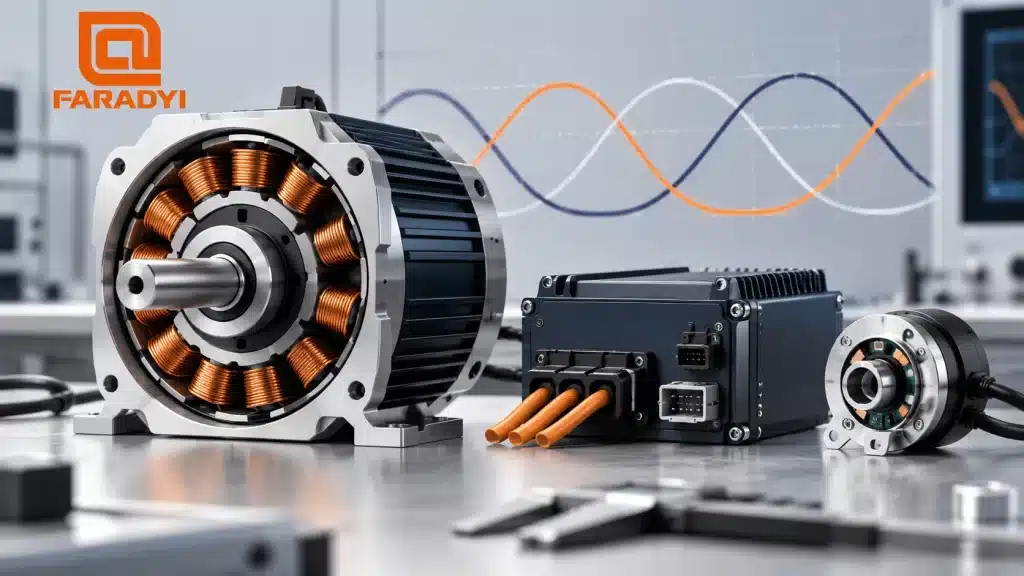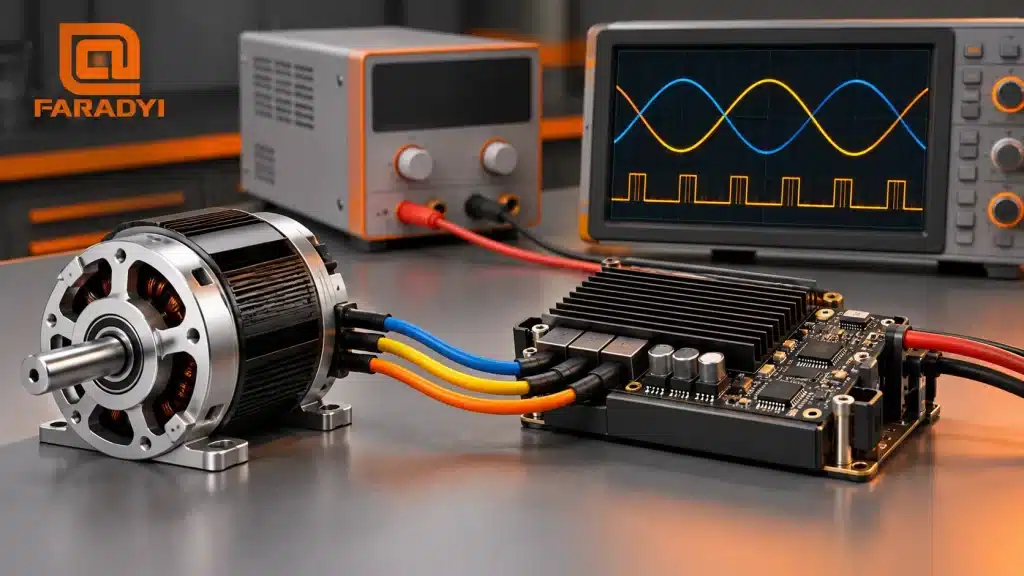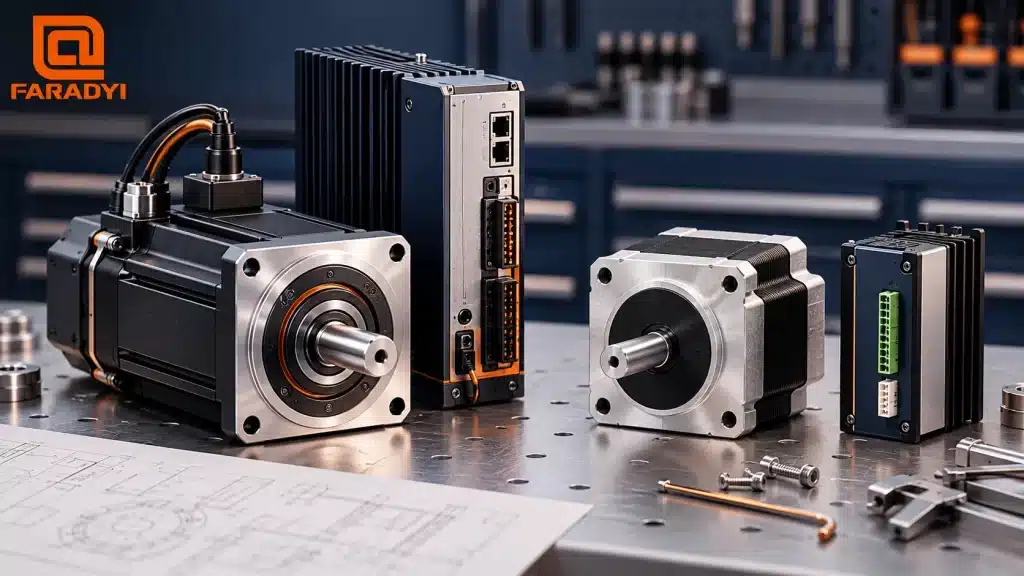
The DC servo motor vs stepper motor decision is easiest when you start with the motion cycle. A short indexing move at modest speed may suit a stepper. A demanding axis with changing loads, higher running speed, or tight settling requirements may justify a servo system. Neither choice can be made from motor wattage or encoder counts alone.
Quick answer: Compare the complete motor, drive, feedback, and mechanism at the required speed and load. Steppers often offer straightforward low-speed positioning; servos use feedback to correct motion error. Choose from actual torque-speed curves, thermal limits, and measured positioning needs, then validate the full cycle.
What “low-voltage DC servo” means here
In this guide, a low-voltage DC servo system means a motor and servo drive powered from a specified DC bus. The motor may be brushed or brushless. A brushless motor’s drive converts that bus into controlled phase currents; a DC supply does not mean the motor windings simply receive fixed DC.
Servo describes feedback control of position, speed, or torque. The drive compares a command with measured behavior and adjusts motor output. It does not make the shaft start or stop instantly. Acceleration, inertia, current limits, and tuning determine the response.
A stepper drive energizes motor phases in sequence to establish commanded positions. Many stepper systems work without continuous position feedback, while closed-loop steppers add feedback and control functions. Check the exact architecture instead of assuming every stepper is open-loop.
DC servo motor vs stepper motor: key differences
On a phone, swipe horizontally to read the comparison.
| Requirement | DC servo system | Stepper system |
|---|---|---|
| Load changes | Uses feedback to correct error within available torque and control limits | Open-loop systems need adequate torque margin; closed-loop behavior varies |
| Torque at speed | Often suits a wider useful speed range; verify its curve | Available torque commonly falls as speed rises; use the motor-drive curve |
| Positioning | Depends on feedback, tuning, mechanics, and load | Depends on step accuracy, current regulation, mechanics, and load |
| Holding | May apply current to maintain position | Energized holding torque can be useful at standstill |
| Commissioning | Usually requires feedback setup and control verification | Can be simpler for a well-sized open-loop axis |
| Total cost | Include drive, feedback, cables, setup, and service | Include driver, supply, margins, and any feedback or brake |
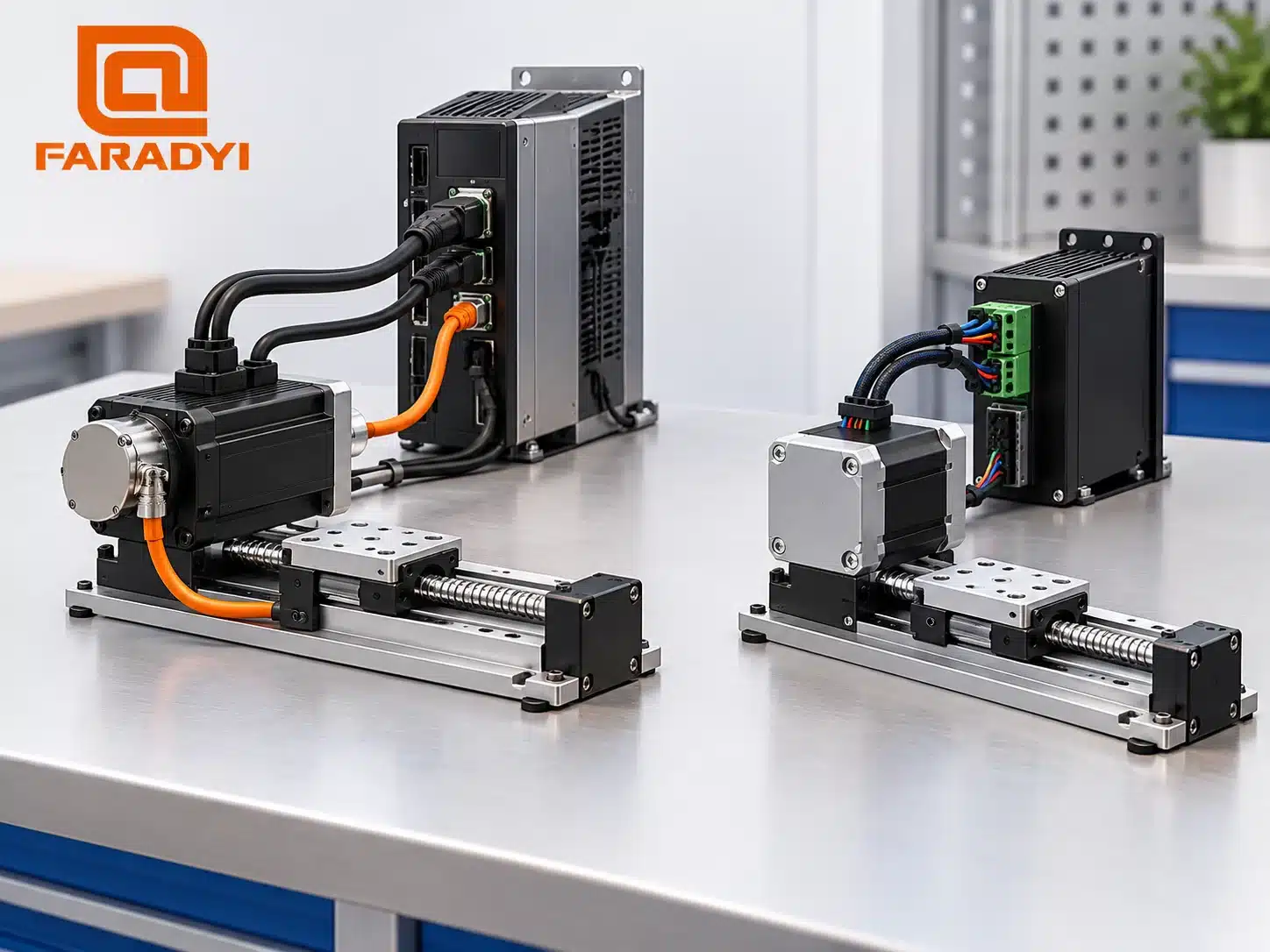
Compare performance at the operating point
Speed and torque
Use the torque available at your loaded speed, not the standstill holding torque printed on a stepper listing. Drive voltage, winding inductance, current settings, and motion profile affect stepper performance. There is no universal 300–600 rpm ceiling for all steppers.
For a servo, distinguish continuous torque from short-duration peak torque. Some motor-drive combinations provide a constant-torque region followed by a region where available torque falls. Check the published envelope at your bus voltage. Do not assume every servo provides three times rated torque or holds rated torque above rated speed.
Resolution, accuracy, and repeatability
Resolution is the smallest command or feedback increment. Accuracy is how close the actual position is to the target. Repeatability is how consistently the axis returns to a position. These are separate specifications.
For example, dividing a nominal 1.8° full step into 16 microsteps gives a command increment of 0.1125°. That arithmetic does not guarantee 0.1125° mechanical accuracy under load. Similarly, a high-count encoder cannot remove screw pitch error, backlash, shaft compliance, or poor calibration.
Ask for the positioning tolerance at the load, across the working travel and temperature range. If the part being positioned matters more than the motor shaft, decide whether feedback at the load is needed.
Vibration and settling
Microstepping can make a stepper run more smoothly, but mechanical resonance and the torque margin still need attention. A servo can also vibrate or hunt if the control loop interacts badly with a flexible mechanism. “Servo” does not mean vibration-free.
Measure move time including settling inside the allowed error band. A brief short-stroke index and a long high-speed traverse can favor different systems. Avoid comparing generic acceleration-time claims without the load inertia, distance, supply, and allowable error.
Holding, temperature, and power loss
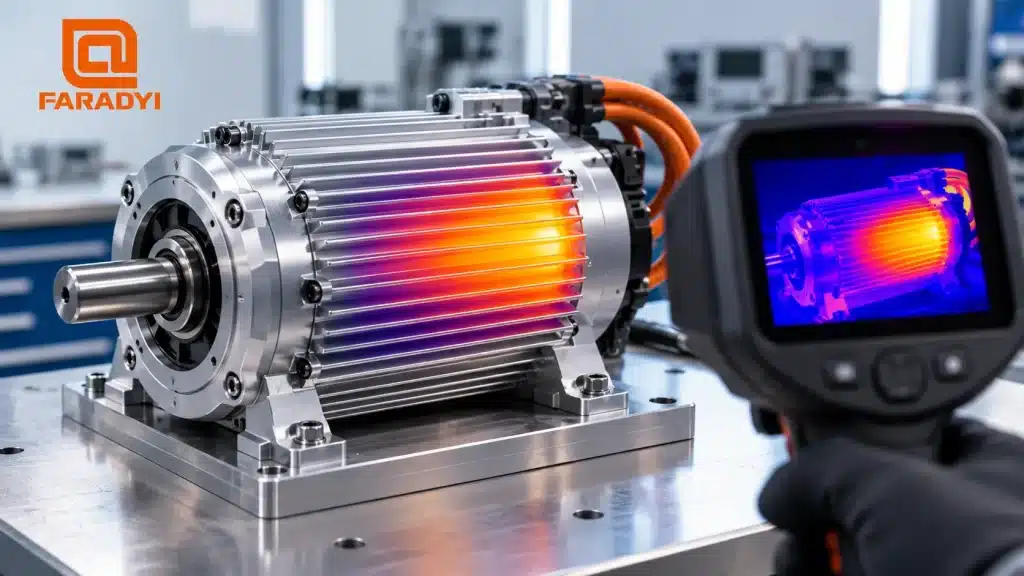
Both technologies may draw current while holding position. That creates heat, even when mechanical output power is zero. Check continuous holding demand and the drive’s idle-current behavior.
Energized holding torque is different from unpowered detent torque. Neither should be assumed to retain a suspended load safely after power loss. Specify the required brake and safety measures for the machine.
A practical selection process
- Describe the cycle. Record travel, loaded speed, acceleration, stops, reversals, dwell time, and production rate.
- Calculate demand at the motor. Include friction, gravity, reflected inertia, and transmission losses. Keep all units consistent.
- Check the curves. Confirm torque margin throughout the motion and the permitted continuous and peak duty.
- Define positioning needs. State accuracy, repeatability, settling time, and what happens if the axis loses position.
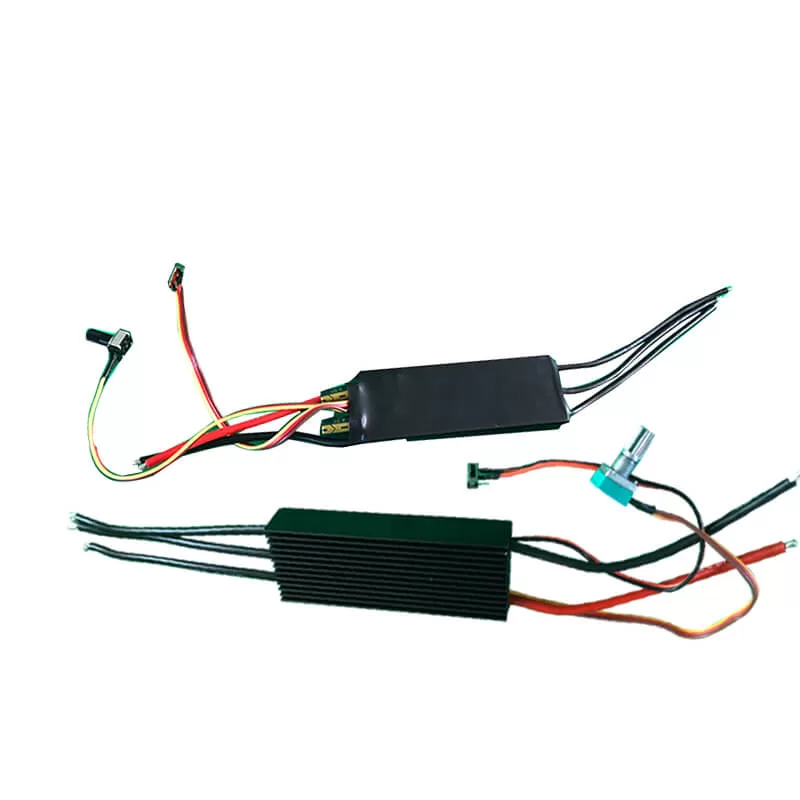
- Match the electrical system. Check supply range, drive current definitions, feedback, command interface, and protection.
- Test a representative axis. Verify temperature, noise, positioning, and recovery from expected load disturbances before committing to production.
A compact feeder making repeatable short moves may be a good stepper candidate if it has adequate torque margin. A fast transfer axis with variable payload may benefit from a servo’s feedback and operating envelope. These are starting points for evaluation, not guarantees for a particular motor.
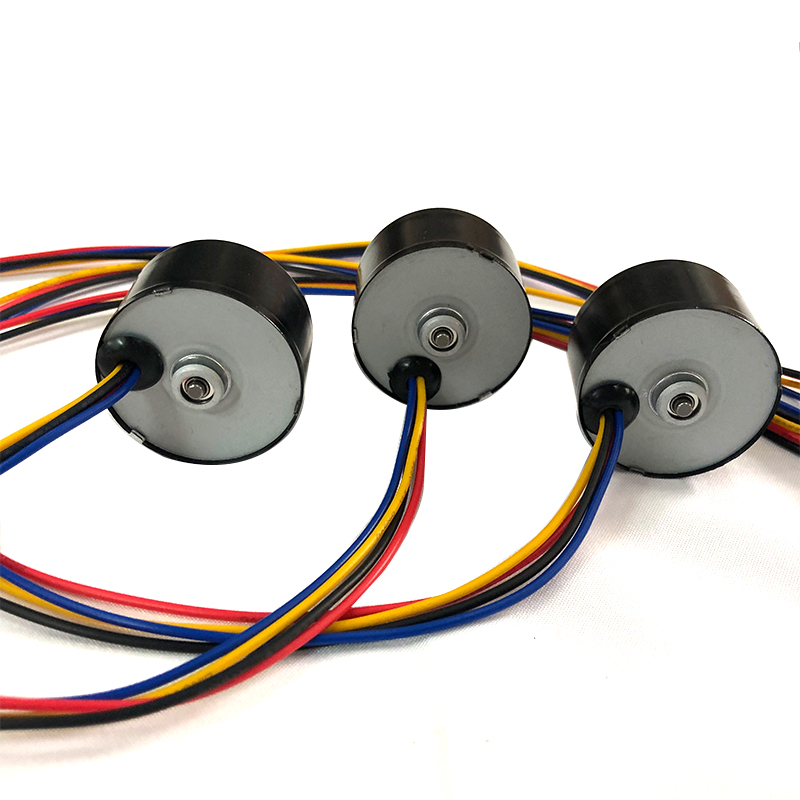
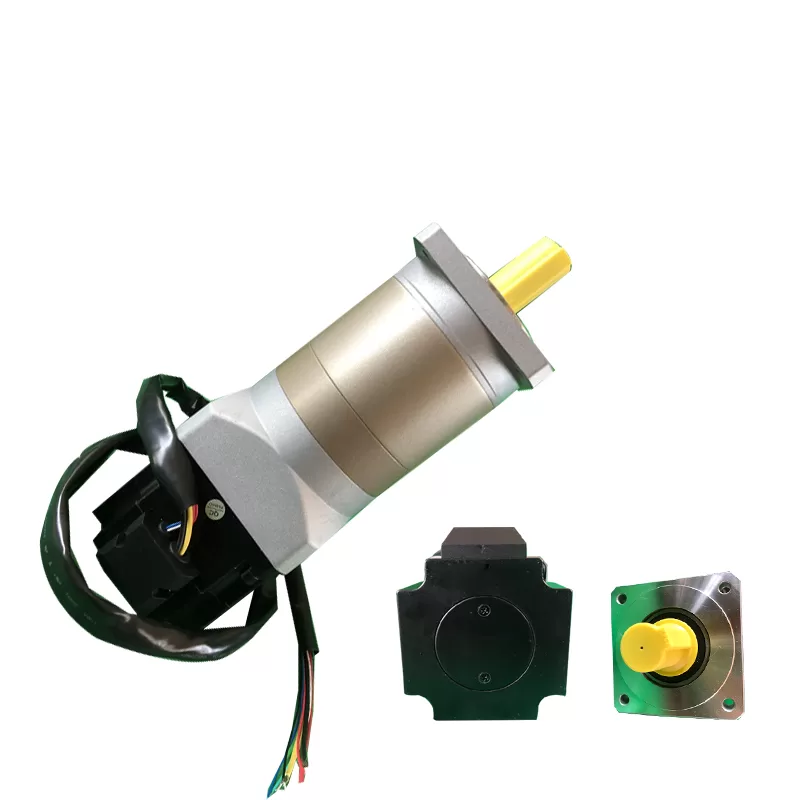
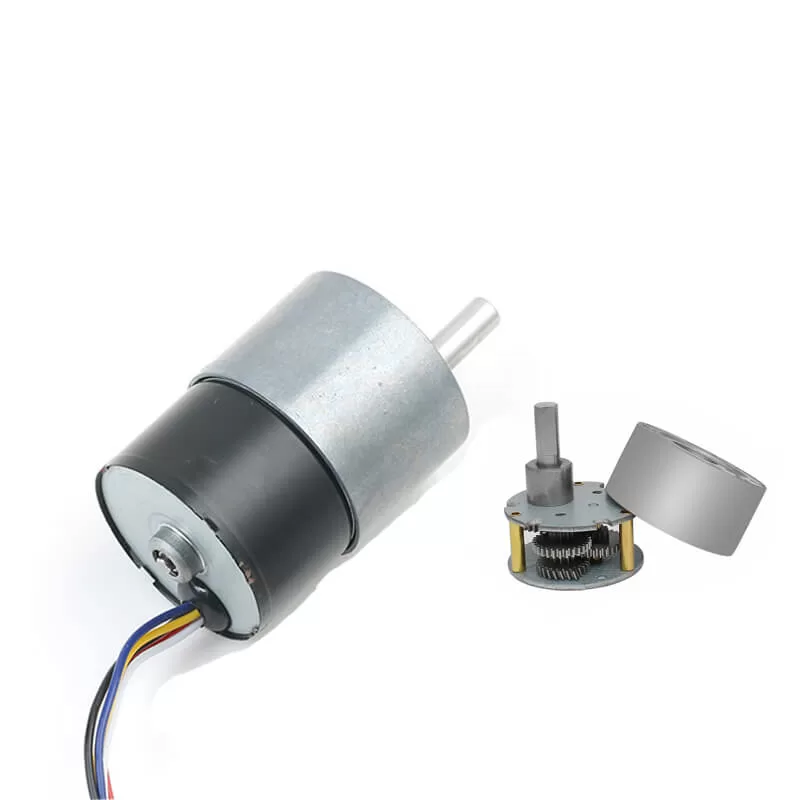
Compare Faradyi stepper motors with appropriate brushless motor options. A general BLDC motor is not automatically a complete positioning servo; request a compatible drive and feedback configuration. For current-control background, see our vector control guide.
What to send for a quotation
Send the available DC supply range, motion profile, continuous and peak torque, load inertia, mounting envelope, transmission details, positioning tolerance, duty cycle, environment, control interface, and expected quantity. Describe any holding-brake or power-loss requirement.
Contact Faradyi with your application details and ask for the motor-drive combination and test conditions that support the proposed selection.
Frequently asked questions
Is a servo always more accurate than a stepper?
No. Compare the complete axis against the required accuracy and repeatability. Feedback resolution alone is not a system-accuracy specification.
Does a closed-loop stepper become a servo motor?
It uses feedback, but its motor construction and performance envelope remain those of the selected stepper system. Review its control behavior and torque-speed curve.
Can I replace a stepper with a DC servo directly?
Usually this requires a system review. Mounting, shaft, drive, feedback, cabling, command interface, and tuning may all change. Matching flange dimensions is not enough.
Make the choice from the full motion cycle
The DC servo motor vs stepper motor comparison should end with a verified operating point and a workable axis design. Choose the system that meets the load, positioning, thermal, and service requirements with a sensible margin, then confirm those requirements in testing.
Technical references