What Factors Affect the Brushless DC Motor Rated Current?
The Bottom Line (Key Takeaway): The brushless DC motor rated current is a critical specification determined by the user’s power supply and required discharge capacity (ampere-hours). The smaller the current drawn from the battery, the longer the equipment (such as an electric bicycle) can operate on a single charge. To optimize battery life and efficiency, engineers must carefully balance the motor’s voltage, torque, and internal losses.
3 Main Factors Determining Rated Current
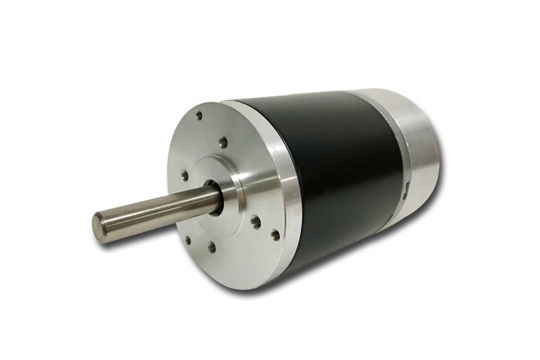
The precise calculation of a motor’s rated current is highly specific and depends on three major engineering factors:
Input Power and Rated Voltage: Once the input power at the rated point and the baseline efficiency are determined, the voltage dictates the current. Simply put: the higher the rated voltage of the motor, the smaller the rated current will be.
Torque Constant: The physical design of the motor plays a huge role. The larger the torque constant of the motor, the smaller the resulting rated current.
No-Load Loss (Friction and Iron Losses): If you can reduce the overall mechanical torque requirements by minimizing the motor’s no-load losses, the no-load current will drop. Consequently, the motor’s total rated current will also decrease proportionally (though this reduction is typically modest).
How Does Rated Voltage Impact Motor Efficiency and Copper Loss?
When you increase the rated voltage of a brushless DC motor, the no-load speed will naturally increase. But what happens if you want to keep the same rated speed while increasing the voltage?
To maintain the same rated speed at a higher voltage, the motor’s back electromotive force (Back EMF) constant must increase proportionally. If the motor’s physical size and working magnetic flux remain unchanged, the manufacturer must increase the number of effective conductors (wire turns) inside the slot.
The Copper Loss Advantage:
Increasing the wire turns means the armature resistance increases, resulting in a higher internal resistance.
However, operating at a higher voltage means the drawn current drops significantly.
Because electrical copper loss is calculated by squaring the current (I²R), the current decreases exponentially while resistance only increases proportionally.
Conclusion on Efficiency: The total copper loss of the motor actually decreases. Therefore, a motor designed for high-voltage operation will inherently have higher electrical efficiency than the exact same motor designed for low-voltage operation. This is the same principle behind high-voltage power grids minimizing transmission line losses.
Safety Note: While higher voltages provide better efficiency and lower rated currents, they also introduce personal safety risks. Designers must carefully weigh efficiency gains against safety requirements when selecting the power supply voltage.