Stepper Motor Advantages and Disadvantages: What Engineers Should Know
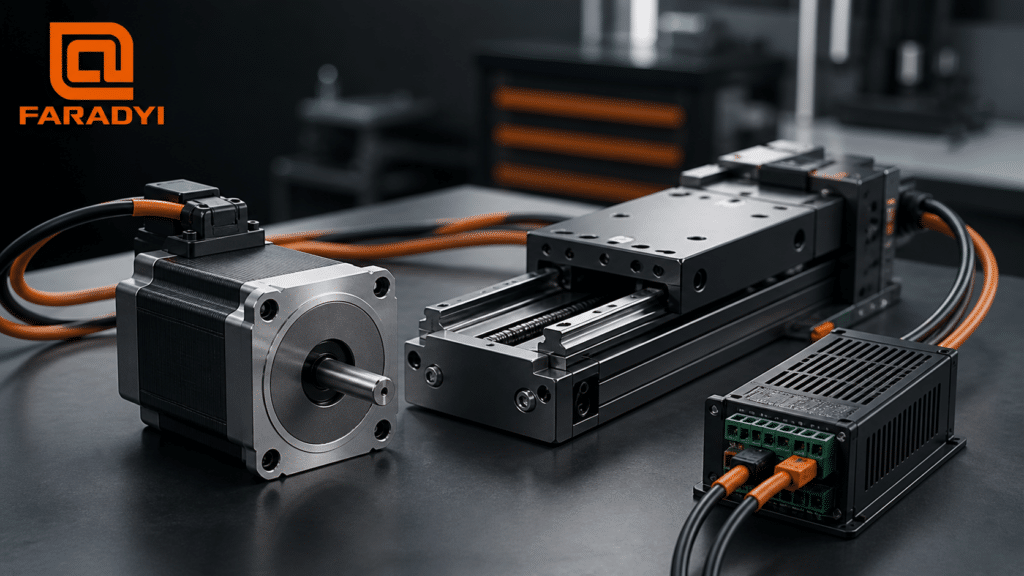
A stepper motor converts electrical command pulses into repeatable angular movement. Because each pulse represents an incremental step, the motor can position a load without a feedback sensor when torque margins and motion profiles are properly engineered. This combination of straightforward control, strong low-speed torque, and useful holding torque makes stepper motors popular in 3D printers, CNC equipment, laboratory automation, dispensing systems, packaging machines, and positioning stages.
The right decision should not be based on holding torque alone. Engineers need to compare the required speed, acceleration, duty cycle, load inertia, positioning tolerance, environment, driver, and power supply. This guide explains both sides of the decision and shows how to specify a reliable motion system.
What Is a Stepper Motor and How Does It Work?
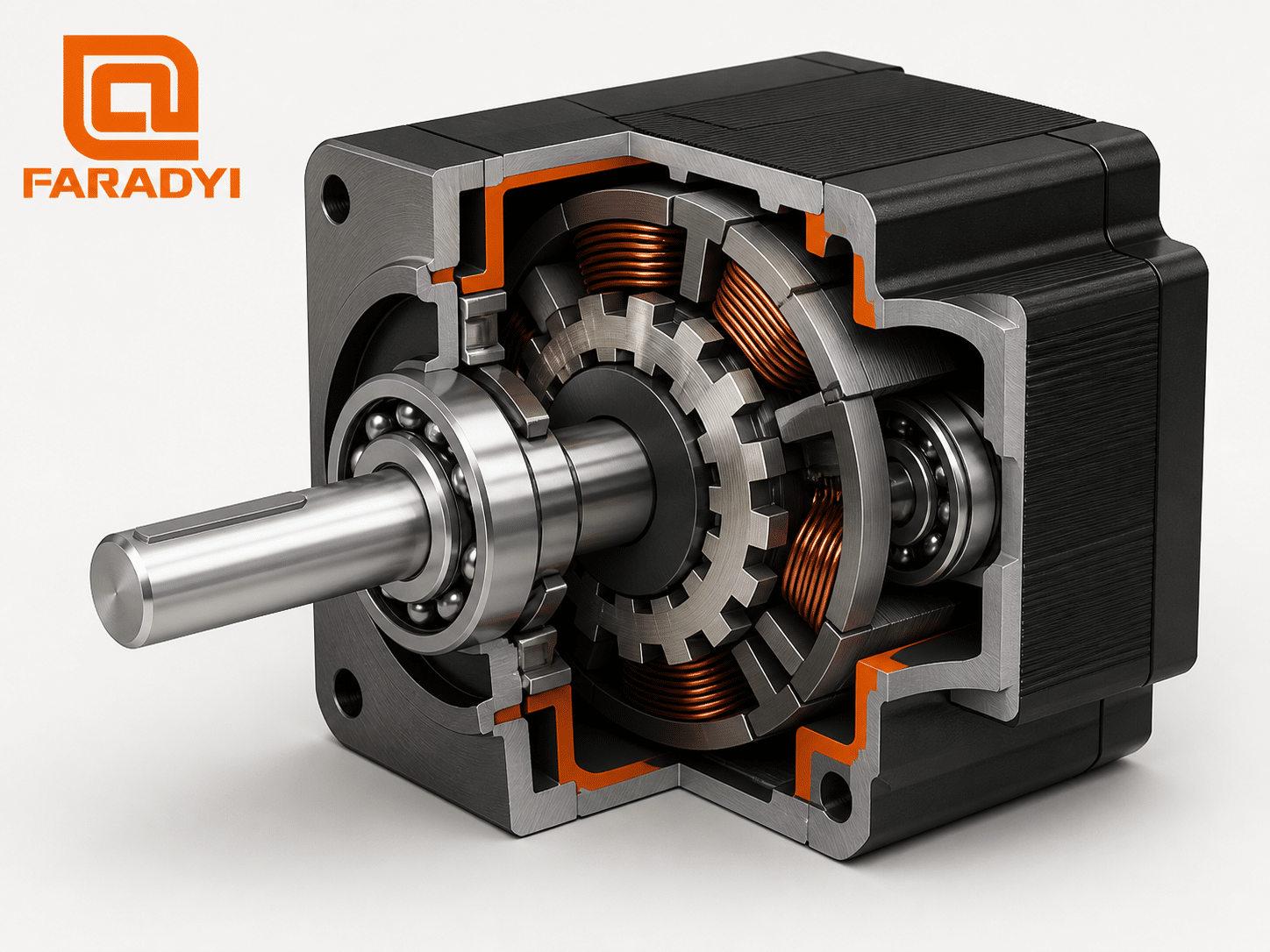
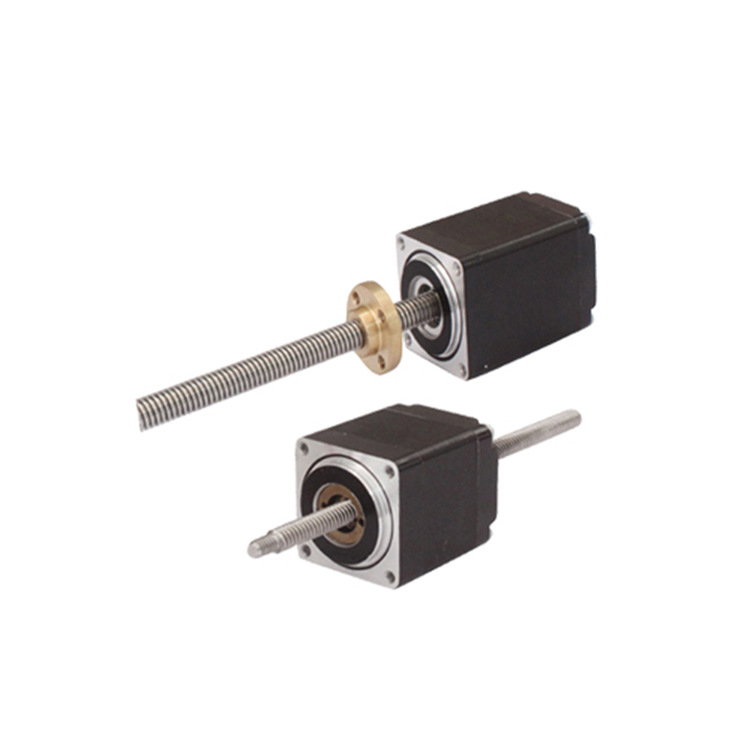
A stepper motor is a brushless synchronous electric motor designed to move in discrete increments. Its driver energizes the stator phases in a controlled sequence, creating a rotating magnetic field. The rotor aligns with each new magnetic position, so a stream of command pulses produces rotation. Pulse count controls commanded position, pulse frequency influences speed, and phase-current control affects available torque.
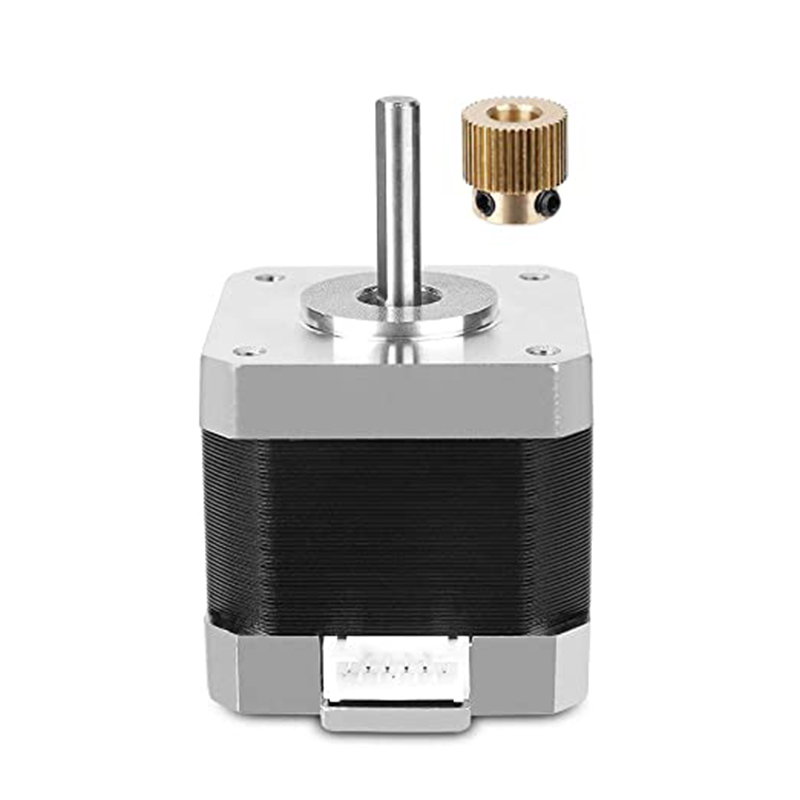
Many industrial systems use a two-phase hybrid stepper motor because its toothed rotor and stator combine fine mechanical step angles with useful torque. Permanent-magnet and variable-reluctance designs are also available, but hybrid designs are common when compact, repeatable positioning is required.
Step angle, resolution, and accuracy are different
A motor with a 1.8-degree full-step angle has 200 commanded full steps per revolution. A microstepping driver can divide those full steps into smaller current increments, improving smoothness and reducing audible noise. However, commanded microstep resolution is not the same as guaranteed shaft accuracy. Load torque, friction, detent torque, mechanical compliance, current regulation, and manufacturing tolerances all influence the final position.
Key Advantages of Stepper Motors
1. Straightforward position and speed control
In a well-sized open-loop system, the controller can command displacement by sending a known number of pulses. This can reduce system complexity because an encoder and feedback loop are not always required. Direction and speed commands are also easy to generate with widely available step-and-direction controllers.
2. Strong low-speed and holding torque
Stepper motors can deliver useful torque at low speed and can resist shaft movement while energized at standstill. This holding capability is valuable for clamps, vertical axes with appropriate safety provisions, indexing mechanisms, and stages that must remain stationary between moves.
Holding torque is measured at zero speed under specified current conditions. It should not be treated as the motor’s available running torque. Dynamic torque decreases as speed rises, so system sizing must use the manufacturer’s torque-speed curve.
3. Repeatable point-to-point motion
When operated within its stable torque region, a stepper motor can repeatedly return to commanded positions. It is especially effective in machines with predictable loads, defined travel distances, and moderate motion profiles.
4. Fast starting, stopping, and reversing
The motor responds directly to changes in the phase sequence. With a suitable acceleration and deceleration profile, this supports frequent indexing, direction changes, and short repetitive moves.
5. Brushless construction and low routine maintenance
Because there are no mechanical brushes to wear, routine motor maintenance is limited. Bearings, connectors, cabling, cooling, and the driven mechanics still need appropriate inspection.
6. Cost-effective positioning
For loads that are stable and predictable, an open-loop stepper system can offer an attractive combination of motor, driver, and controller cost. A stepper motor matched to the application may avoid the encoder, tuning effort, and higher-performance controller associated with a servo system.
Main Disadvantages and Limitations
Torque decreases as speed increases
Winding inductance limits how quickly phase current can rise. At higher step rates, current may not reach its commanded value before the next commutation event, so available torque falls. A suitable supply voltage and current-regulating driver can improve high-speed performance, but the system must remain within the motor and driver ratings.
Open-loop systems can miss steps
An open-loop controller assumes that the rotor followed every command. If acceleration is too aggressive, the load changes unexpectedly, the motor enters resonance, or demanded torque exceeds available pull-out torque, the rotor may lose synchronism. The controller normally cannot detect the resulting position error without feedback or an external reference.
Heat and energy use at standstill
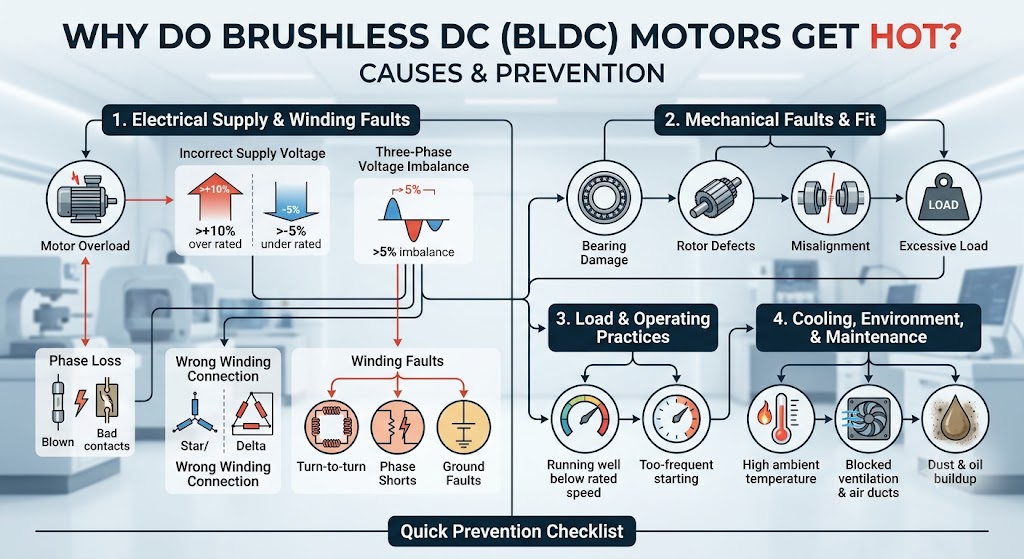
A stepper motor may continue drawing phase current while holding position. This produces heat even when the shaft is not moving. Idle-current reduction, an efficient current-regulating driver, adequate mounting, airflow, and realistic duty-cycle testing help control temperature.
Resonance, vibration, and audible noise
The motor’s discrete torque impulses can interact with load inertia and mechanical compliance. Certain speeds may produce ringing, vibration, noise, or instability. Microstepping, acceleration profiling, mechanical damping, a properly sized load-to-motor inertia relationship, and avoiding problematic speed bands can improve performance.
Efficiency can be lower than a servo system
An open-loop driver supplies the commanded current whether the instantaneous load needs all of it or not. In applications with long hold periods, broad speed ranges, or highly variable load, a correctly sized servo or closed-loop stepper may use energy more effectively.
No automatic position verification in open loop
Repeatable commands do not prove that the machine reached the target. Applications involving collision risk, product quality, expensive tooling, or safety may need an encoder, limit switch, home sensor, brake, or higher-level verification.
Stepper Motor Advantages and Disadvantages at a Glance
| Design factor | Advantage | Limitation or condition |
|---|---|---|
| Position control | Pulse-based commands are simple to implement. | Open-loop control does not verify actual position. |
| Low-speed operation | Strong low-speed torque and responsive indexing. | Resonance may occur at particular operating speeds. |
| Holding | Can resist movement while energized at standstill. | Holding current creates heat and consumes power. |
| High-speed operation | Useful over a defined application-specific range. | Torque generally falls as speed increases. |
| System cost | Open-loop systems can reduce component complexity. | Feedback or safety hardware may still be required. |
| Maintenance | Brushless construction eliminates brush replacement. | Bearings, wiring, cooling, and mechanics still require care. |
| Motion quality | Microstepping can improve smoothness and noise. | More microsteps do not automatically mean greater accuracy. |
Phone users: swipe horizontally to view all table columns.
Holding Torque vs. Running Torque
This distinction prevents one of the most common sizing mistakes. Holding torque is the maximum static torque the energized motor can resist at standstill under specified conditions. Running torque is the torque available while the motor is rotating, and it changes with speed, driver, supply voltage, current setting, winding configuration, and thermal conditions.
Acceleration adds torque demand. Therefore, a load that appears acceptable based on steady-state friction may still stall during a fast ramp. Include inertia, acceleration, gravity, transmission efficiency, friction variation, external forces, and an appropriate design margin. Validate the complete motion profile on the exact motor-driver-power-supply combination.
Open-Loop, Closed-Loop, or Servo?

The best architecture depends on how predictable the application is and how serious a position error would be.
| System | Best fit | Primary tradeoff |
|---|---|---|
| Open-loop stepper | Predictable loads, low-to-moderate speeds, economical point-to-point motion | Does not automatically detect missed steps |
| Closed-loop stepper | Applications needing position verification or improved load response while retaining stepper characteristics | Added encoder, wiring, controller complexity, and cost |
| Servo motor | High speed, rapid acceleration, wide speed range, dynamic loads, and fast disturbance correction | Usually greater system cost and tuning requirements |
Phone users: swipe horizontally to view all table columns.
A closed-loop stepper can detect position error and adjust current or generate a fault, depending on the drive. It is a useful middle option, but feedback cannot create torque beyond the motor’s physical torque-speed envelope. A servo is usually the stronger choice when the machine needs high bandwidth, sustained high-speed torque, or rapid recovery from unpredictable disturbances.
How Microstepping Helps—and What It Cannot Do
Microstepping regulates phase currents to command intermediate electrical positions between full steps. It can reduce low-speed vibration, make motion smoother, and lower audible noise. It may also reduce mechanical excitation in resonance-prone equipment.
However, the incremental torque between very small microsteps can be limited. Friction or external load may prevent the shaft from settling at every theoretical microstep position. Use microstepping primarily for motion quality, and confirm actual positioning accuracy through measurement when tolerance is critical.
Where Stepper Motors Work Well
- 3D printers and desktop fabrication: controlled movement of axes, extruders, and material feeds.
- CNC and laser equipment: repeatable positioning where speed and cutting forces remain within the torque envelope.
- Laboratory and medical equipment: pumps, sample handling, optical stages, and controlled dispensing, subject to applicable regulatory design requirements.
- Packaging and labeling: indexing, feeding, dosing, and print-position adjustment.
- Robotics and automation: grippers, compact axes, camera positioning, and light-duty actuators.
- Office and commercial equipment: paper handling, vending mechanisms, scanners, and small positioning assemblies.
When a Stepper Motor May Not Be the Best Choice
Consider another motion technology when the application demands sustained high speed, high acceleration with substantial inertia, quiet operation across a broad speed range, maximum energy efficiency, or continuous verification under unpredictable loads. A servo may be more suitable if a transient position error cannot be accepted or if the machine must recover rapidly from disturbances.
Also evaluate the entire transmission. A motor cannot compensate for excessive backlash, poor alignment, inadequate bearings, a flexible mounting plate, or an undersized coupling.
How to Select the Right Stepper Motor
Use the following checklist when comparing Faradyi Motor’s stepper motor range or preparing an engineering inquiry.
- Define the load: calculate reflected inertia, friction, gravity, external force, transmission efficiency, and worst-case variation.
- Define motion: specify travel, maximum speed, acceleration, deceleration, move time, dwell time, and cycles per hour.
- Set positioning requirements: distinguish command resolution, repeatability, absolute accuracy, settling time, and allowable error.
- Choose the mechanical transmission: establish screw lead, gear ratio, belt ratio, backlash, compliance, and radial or axial shaft loads.
- Check the torque-speed curve: use data for the intended driver, voltage, current, and winding connection—not holding torque alone.
- Review thermal conditions: consider ambient temperature, enclosure, mounting surface, airflow, duty cycle, and standstill current.
- Select the driver and supply: confirm current rating, voltage range, microstep options, protection functions, control interface, and electromagnetic-compatibility needs.
- Decide whether feedback is needed: consider homing, limit detection, an encoder, or servo control based on the consequence of position loss.
- Prototype the worst case: test hot and cold conditions, maximum payload, voltage tolerance, cable length, repeated cycles, emergency stops, and realistic disturbances.
How to Improve Stepper Motor Performance
- Use an acceleration profile instead of commanding an abrupt jump to high speed.
- Set phase current according to the motor and driver documentation.
- Apply idle-current reduction when holding requirements permit it.
- Use microstepping to improve smoothness, then measure real load-position performance.
- Keep the operating point below the relevant torque-speed curve with adequate margin.
- Improve mounting rigidity, alignment, damping, and coupling selection.
- Use appropriate cable routing, shielding, grounding, and connectors for the installation.
- Add feedback when an undetected missed step is unacceptable.
For installation guidance, see Faradyi Motor’s guide on how to wire a stepper motor. If temperature is the main concern, review these solutions for stepper motor overheating.
Frequently Asked Questions
What is the biggest advantage of a stepper motor?
Its principal advantage is straightforward, repeatable point-to-point positioning with strong low-speed and holding torque. For predictable loads, this can provide an economical motion-control solution without encoder feedback.
What is the main disadvantage of a stepper motor?
Available torque generally decreases as speed rises. In open-loop operation, the controller may not know when overload, resonance, or an aggressive motion profile causes missed steps.
Can a stepper motor run continuously?
Yes, if its speed, torque, current, driver, duty cycle, bearings, and temperature remain within their ratings. Continuous operation should be validated using the actual installation and ambient conditions.
Does a stepper motor need an encoder?
Not always. Stable, predictable applications can often use open-loop control. Add an encoder or another verification method when loads vary, stalls are possible, recovery is required, or position loss has serious consequences.
Does microstepping increase accuracy?
Microstepping mainly improves smoothness and can reduce noise and vibration. It increases commanded resolution, but friction, load, incremental torque, and motor tolerances mean it does not automatically increase absolute positioning accuracy.
Is a stepper motor better than a servo motor?
Neither is universally better. A stepper motor is often efficient from a cost and control-complexity perspective for predictable low-to-moderate-speed positioning. A servo is generally better for high speed, rapid acceleration, dynamic loads, and verified closed-loop response.
Choose a Stepper Motor for Your Application
A stepper motor is a practical choice when its benefits match the real motion profile and its limitations are addressed by the system design. Start with load and speed requirements, then select the motor, driver, power supply, mechanics, and feedback strategy as one coordinated system.
Explore Faradyi Motor stepper motor options, or contact the engineering team with your required torque, speed, supply voltage, motion profile, duty cycle, shaft dimensions, environmental conditions, and expected order volume. Providing these details helps Faradyi Motor recommend a more appropriate configuration and accelerate quotation.
Technical References